 Francesco Chiaramonte
When can you shower after a tattoo? It depends on the bandage your artist used. With a waterproof second skin bandage such as Saniderm or Tegaderm, you can usually shower the same day with the bandage on. With plastic wrap or a standard bandage, wait until your artist says to take it off (often several hours to the next morning), then rinse gently with lukewarm water.
Every source I checked agrees on the core rules: lukewarm water, no direct spray on the tattoo, no scrubbing, and pat dry. This guide gives you the timeline for each bandage type, a step-by-step first shower, and what to do if your tattoo gets wetter than planned. For the full healing picture, see our complete tattoo aftercare guide.
Can You Shower With a New Tattoo? The Short Answer
Yes, you can shower with a new tattoo, but the timing depends on how it is covered. The numbers below come from tattoo studios and the Saniderm manufacturer. They differ a little, so your artist's instructions always win.
First Shower Timeline by Bandage Type
| Bandage type | When to take the first shower | What to do |
|---|---|---|
| Second skin (Saniderm, Tegaderm) | Same day, with the bandage on. Sacred Raven Tattoo says 3-4 hours after the session; Mantra Tattoo says as soon as you get home | Keep the bandage on and sealed. Keep it short and avoid direct spray |
| Plastic wrap | Wait for your artist's removal time. Studios quote 12-24 hours | Remove the wrap, then wash gently. Do not get the wrap wet |
| Standard bandage or gauze | 12-24 hours per Mantra Tattoo; 24 hours per Sacred Raven and RBI Tattoo for standard wraps | Remove as instructed, then wash gently |
| No bandage | Follow your artist. A gentle rinse is normal once the covering is off | Lukewarm water, hands only, pat dry |
Sources: Sacred Raven Tattoo, Mantra Tattoo, and RBI Tattoo. Cleveland Clinic says a bandage may need to stay on for "at least three hours or more, depending on the tattoo size" (Cleveland Clinic, 2026).
Studios disagree on whether the plastic wrap wait is 12 hours or 24. That is normal: the right number depends on the tattoo size and your artist's method. Ask before you leave the shop and write it down.
How to Take Your First Shower After a Tattoo
Treat a fresh tattoo as an open wound for the first days. The goal is to get clean without soaking, scrubbing, or blasting the skin.
If You Have a Second Skin Bandage
- Check that all edges are sealed. Press down any lifting corner before you get in.
- Use lukewarm water and stand so the spray hits you below or beside the bandage.
- Keep the shower short.
- Pat the outside of the bandage dry with a clean towel. Do not rub, because rubbing can loosen the edges.
If You Have Plastic Wrap or a Standard Bandage
- Wash your hands with soap first.
- Take the covering off at the time your artist gave you. If it sticks, soften it with warm water and peel it slowly.
- Rinse the tattoo with lukewarm water, using your hand or fingertips to move the water over it.
- Lather a fragrance-free soap in your hands, then glide the suds over the tattoo. No washcloth, loofah, or scrubbing.
- Rinse until the soap is gone. Plasma and excess ink wash off in the first days, and that is normal.
- Pat dry with a clean paper towel and let the skin air dry for a few minutes before you apply your artist's recommended ointment or lotion.
Cleveland Clinic gives the same outline: wash with mild, fragrance-free, antibacterial soap and warm (not hot) water twice a day, do not scrub, and pat dry with a clean paper towel (Cleveland Clinic, 2026).
Water Temperature, Pressure, and Shower Length
Temperature. Use lukewarm water. Hot water and steam open your pores, which several studios link to ink seeping out and a higher infection risk. Hustle Butter also notes that cold water can tighten the skin and feel uncomfortable (Hustle Butter, 2024).
Pressure. Do not point the showerhead at the tattoo. Let the water hit another part of your body and run over the tattoo, or cup your hand and pour water onto it. A handheld showerhead on a low setting helps with back and shoulder pieces.
Length. Keep showers short: about 5-10 minutes, per RBI Tattoo and Mantra Tattoo. Long showers soften scabs and, with second skin, can weaken the adhesive at the edges.
Soap, Drying, and What to Avoid in the Shower
Choose a mild, fragrance-free soap with no perfumes or dyes. Studios often suggest unscented antibacterial soap or a tattoo-specific foaming wash, and Sacred Raven Tattoo warns against soaps with alcohol because they dry the skin. If you are unsure, ask your artist which soap they use. Our best tattoo aftercare products guide compares options.
Dry with a clean paper towel, not a bath towel. Shampoo and conditioner should not run over the tattoo, so rinse your hair with your head tilted away from the area, then wash the tattoo last.
| Avoid | Why |
|---|---|
| Loofahs, washcloths, scrub brushes | Abrasive and can hold bacteria |
| Exfoliating scrubs and acids | Can remove scabs and irritate the skin |
| Fragranced body wash and essential oils | Common irritants on open skin |
| Bath bombs, salts, and oils | Soften scabs and add irritants |
| Hot water and steam | Can irritate the skin and cause ink loss |
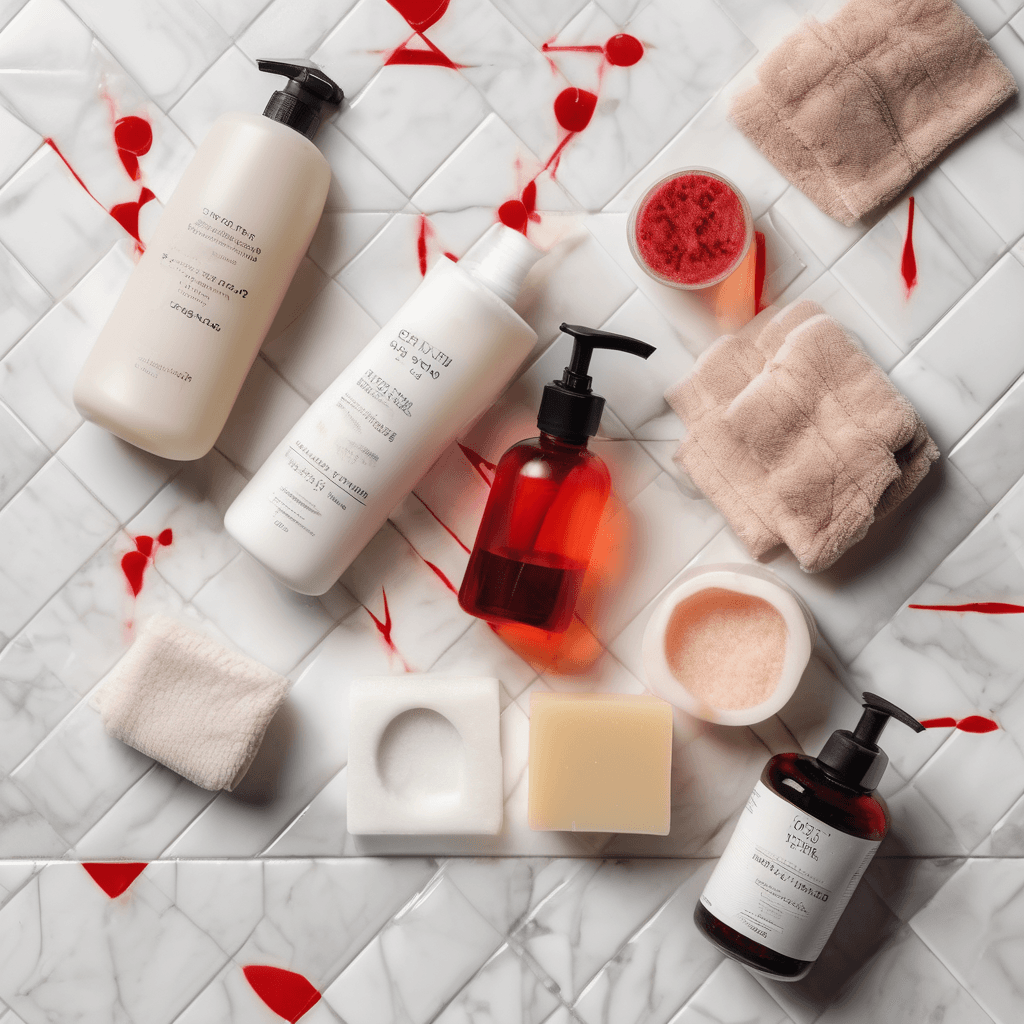 Shower products to avoid with new tattoo
Avoid harsh products like exfoliating scrubs, loofahs, and fragranced body wash during healing.
Shower products to avoid with new tattoo
Avoid harsh products like exfoliating scrubs, loofahs, and fragranced body wash during healing.
Showering With Saniderm or Another Second Skin Bandage
Saniderm's own guidance (June 2026) is that you can shower with it on. The bandage is waterproof and breathable, so it shields the tattoo from direct water and from soap and shampoo (Saniderm, 2026). The manufacturer still gives three limits:
- Keep showers short. Long, hot showers can weaken the adhesive around the edges.
- Avoid sustained high-pressure spray. Constant pressure can stress the edges even if the bandage holds.
- Skip baths, hot tubs, pools, lakes, rivers, and the ocean. Submerging the bandage raises the chance that water gets underneath.
What If Water Gets Under the Bandage?
Saniderm says that if water gets under the bandage, it is generally best to remove it. Depending on how far along healing is, you may be able to apply a new one, so check with your artist. The reasoning is that a sealed bandage should hold only your body's own healing fluids, and outside water or bacteria trapped against the skin is a risk.
If the edges lift but no water has gotten in, tell your artist. They may tell you to replace or remove the bandage.
Showering After You Remove the Bandage
Once the bandage is off, the routine from the first shower applies for the rest of the healing period. Cleveland Clinic says itching, flaking, and scabbing are common in weeks 2 to 4, and that scabs are healing by about three weeks (Cleveland Clinic, 2026).
- Days 1-3: Gentle hand washing with lukewarm water and mild soap. Expect some weeping.
- Days 3-14: Water can run over the area, but do not rinse forcefully, and never pick or scrub flaking skin. Our tattoo peeling and scabbing guide shows what is normal.
- Weeks 2-4: Keep using fragrance-free soap and keep showers short until the scabs are gone and the skin feels smooth.
Shower vs. Bath vs. Soaking
A shower is brief and the water runs off. A bath, pool, or hot tub leaves the tattoo sitting in water, which softens scabs and carries bacteria and chemicals.
| Activity | When it is usually safe |
|---|---|
| Shower | After the bandage guidance above |
| Bath | After full healing, usually 3-4 weeks per Sacred Raven Tattoo and RBI Tattoo (Mantra Tattoo says 2-3 weeks) |
| Pool, ocean, lake | Same window. See can you swim with a new tattoo |
| Hot tub or sauna | After full healing. Sacred Raven Tattoo lists saunas with the activities to avoid |
Cleveland Clinic says to avoid hot tubs, bathtubs, pools, and similar water until the tattoo is fully healed. If a fixed date matters (a beach trip, for example), plan the tattoo date around it.
Shaving, Exfoliating, and the Gym
Shaving. Do not shave over a healing tattoo. Sacred Raven Tattoo suggests waiting 21-30 days before shaving. Once the skin is smooth with no scabs, shave lightly with a clean razor, or leave the area alone if it feels tender.
Exfoliating. No scrubs, dry brushes, or acid products until the skin has fully healed. Even then, start gently.
Gym showers. A public shower is fine if you keep the tattoo covered or out of the spray, wear shower sandals, and avoid sauna and steam rooms. Bring your own soap and a clean paper towel. Second skin bandages are designed for everyday activity, but heavy sweating can loosen edges, so follow your artist's advice on workouts.
What to Do If You Got Your Tattoo Soaked
Do not panic. A brief splash on a healing tattoo is not likely to ruin it, and Mantra Tattoo lists accidentally getting it too wet among common questions.
- Wash your hands and gently pat the area dry with a clean paper towel.
- If a plastic wrap or standard bandage got wet, take it off and replace it only if your artist said to.
- If water got under a second skin bandage, remove it as described above and contact your artist.
- Watch for signs of infection: spreading redness, warmth, pus, increasing pain, or fever. Call a doctor if you see them.
Signs Your Shower Routine Needs Adjusting
- Patchy or faded ink: Often a sign of scrubbing, hot water, or picking at scabs.
- More redness or swelling after showers: Water too hot, showers too long, or a product irritating the skin. Some redness and mild swelling in the first 2-3 days is normal (RBI Tattoo).
- Soft, white scabs: The skin stayed wet too long. Dry more carefully.
- Infection signs: Spreading redness, warmth, pus, or fever. Seek medical care.
Planning a Tattoo? Think About Healing Before the Design
If you are still choosing a design, placement affects how hard showers are to manage. Back and rib pieces are harder to keep out of the spray than a forearm. Our Ink Studio AI tattoo generator can give you concepts to discuss with your artist, along with placement and aftercare questions.
Frequently Asked Questions
Can I shower the same day I get a tattoo?
Yes, if you have a waterproof second skin bandage and your artist says it is fine. Sacred Raven Tattoo says 3-4 hours after the session with Saniderm. With plastic wrap or a standard bandage, wait until your artist's removal time, often 12-24 hours.
Can I shower with second skin on?
Yes. Saniderm says its bandage is made to be showered in. Keep showers short, avoid direct high-pressure spray, and pat the outside dry. If water gets under it, remove it and ask your artist what to do next.
Can I wash my hair after a new tattoo?
Yes. Keep shampoo and conditioner from running over the tattoo by tilting your head away from it, and rinse the tattoo with plain lukewarm water afterward. Wash the tattoo last so you do not leave residue on it.
How long should I wait after a tattoo to shower?
For a plastic wrap or standard bandage, studios quote 12-24 hours. For a second skin bandage, a few hours to the same day. Follow your artist's instructions over a general guide.
What if soap gets on my new tattoo?
Soap is fine if it is mild and fragrance-free, because you should wash the tattoo anyway. Rinse it off fully with lukewarm water and pat dry. If a harsh or fragranced soap got on it, rinse well and watch for redness or itching.
How long should showers be with a new tattoo?
Keep them to about 5-10 minutes, according to RBI Tattoo and Mantra Tattoo. Longer showers soften scabs and can weaken a second skin bandage at the edges.
Can I take a bath instead of a shower?
Not until the tattoo is healed. Studios give 2-4 weeks, and Cleveland Clinic says to avoid bathtubs, hot tubs, and pools until the tattoo is fully healed.
What if my tattoo looks faded after showering?
Wet skin can make a healing tattoo look duller, and a cloudy layer of dry skin can hide the ink. If the color looks patchy after the skin settles, show your artist.
The Bottom Line
You can shower after a tattoo the same day with a second skin bandage, and after the bandage comes off (usually 12-24 hours) with plastic wrap. Use lukewarm water, keep the spray off the tattoo, keep showers short, use mild fragrance-free soap, and pat dry with paper towel. Keep baths, pools, and hot tubs for after the tattoo has healed, and when your artist's advice differs from a guide like this one, follow your artist.