 Francesco Chiaramonte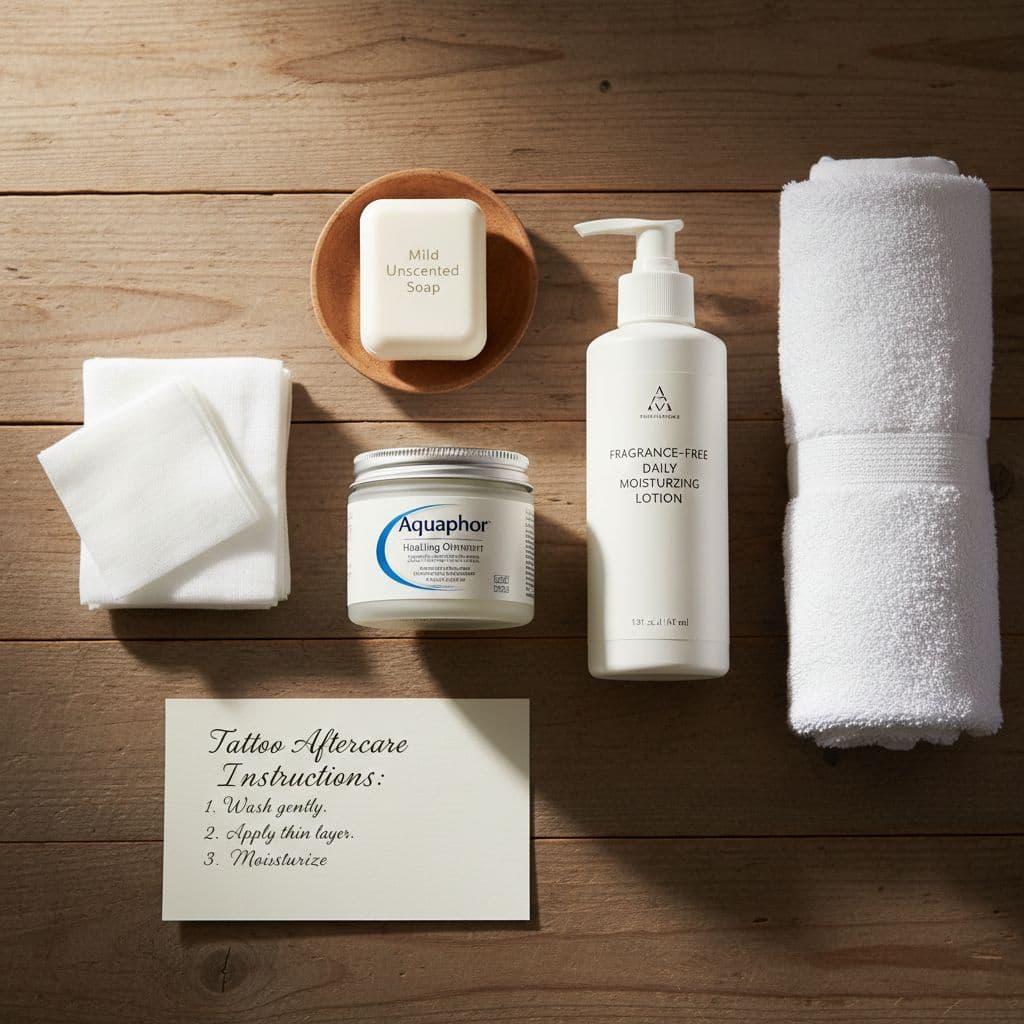
The best tattoo aftercare products are simple: a fragrance-free cleanser, a thin layer of healing ointment (Aquaphor or CeraVe Healing Ointment) for the first two to three days, a fragrance-free lotion (Aveeno or Cetaphil) once peeling starts, and a mineral sunscreen after the tattoo has fully healed. A second-skin film such as Saniderm can replace the ointment step for the first days if your artist applies one. You do not need a $90 kit to heal a tattoo well.
What you do need is to read labels. When I rechecked the classic picks against manufacturer pages and drug labels in October 2026, I found that two of the most recommended drugstore products, Dial Gold soap and A+D Original Ointment, both list fragrance. This guide shows what each product contains, which healing stage it fits, and which ingredients to skip.
For the day-by-day routine (washing, bandage removal, sleep, and showers), read our complete tattoo aftercare guide. This page covers the products.
Our Picks at a Glance
| Need | Budget pick | Sensitive-skin pick | Premium pick |
|---|---|---|---|
| Cleanser | Dr. Bronner's Baby Unscented | Cetaphil Gentle Skin Cleanser | Hustle Butter Foaming Tattoo Soap |
| Ointment (days 1-3) | Aquaphor Healing Ointment | CeraVe Healing Ointment (lanolin-free) | Hustle Butter Fragrance-Free Tattoo Balm |
| Second-skin film | Tegaderm Transparent Film | Saniderm | Recovery Derm Shield |
| Lotion (peeling phase) | Aveeno Daily Moisturizing (fragrance-free) | Cetaphil Daily Hydrating Lotion | After Inked Tattoo Moisturizer |
| Sunscreen (healed only) | Blue Lizard Sensitive Mineral Stick SPF 50+ | Native Mineral Sunscreen SPF 30 | Hustle Butter Mineral Sunscreen SPF 50 |
Your artist's aftercare sheet comes first. If it names a product, use it. The artist knows the inks, the needle work, and how your skin reacted during the session.
Why Product Choice Matters: The Science of Tattoo Healing
A tattoo is a wound with pigment in it. The products you use do not heal it (your body does that), but the wrong product can irritate the skin, trigger an allergy, or dry it out until it scabs.
Your Skin After a Tattoo: What's Actually Happening
The needles push ink into the dermis, the layer below the surface. Your body treats the area as an injury and heals it in overlapping phases:
| Phase | Typical days | What you see | What the skin needs |
|---|---|---|---|
| Inflammation | 1-3 | Redness, warmth, weeping plasma and excess ink | Gentle cleaning, a thin protective layer |
| Peeling | 4-14 | Flaking, itching, tight skin | Light moisture, no picking |
| Settling | 14-30+ | Shiny or "milky" look, mild dryness | Daily fragrance-free lotion, no sun |
| Healed | 4-6 weeks and beyond | Clear, settled lines | Sunscreen and regular moisture |
Board-certified dermatologist Shari Marchbein, MD, told Allure (2023) that a tattoo takes about four to six weeks to heal completely, and that letting it dry out is one of the biggest mistakes. A tattoo supply guide from FYT Supplies puts surface healing at two to four weeks, with deeper healing taking up to a few months. Large or heavily saturated pieces sit at the long end.
Why Tattoo-Specific Needs Differ from Regular Wound Care
A small cut heals in days and nobody cares how the scar looks. A tattoo is different in four ways:
1. The goal is a clean result, not only a closed wound. Thick scabs that crack or get pulled off can take pigment with them and leave light spots.
2. Healing takes weeks. You will apply a product two or three times a day for a month or more, so mild irritants have time to cause a reaction.
3. The surface area is large. A sleeve or back piece needs a product that spreads thinly and does not clog pores across a big area.
4. Mistakes are permanent. Scarring and patchy ink usually mean a touch-up session. Our tattoo touch-ups guide covers when that becomes necessary.
What to Look for in Tattoo Aftercare Products
Good aftercare products share four traits:
- Fragrance-free. Fragrance is a common cause of skin reactions, and the FDA notes that even products labeled "unscented" may contain fragrance ingredients added to mask other smells.
- Gentle on skin pH. Normal healthy skin has a pH of about 5.4 to 5.9, according to a 2014 study in the Indian Journal of Dermatology. The same study found that many bar soaps are well above that range.
- The right thickness for the phase. A protective ointment early, a lighter lotion once the surface closes.
- No active ingredients. Exfoliating acids, retinol, and medicated creams belong on healed skin only.
How to Read a Tattoo Aftercare Label
Most aftercare products are built from the same small set of ingredients. Once you recognize them, you can judge a $5 drugstore tube and a $25 tattoo balm by the same standard.
| Ingredient on the label | What it does | Verdict for a new tattoo |
|---|---|---|
| Petrolatum | Seals in moisture (occlusive) | Useful in a thin layer early. Sources disagree on heavy or long use (see below). |
| Mineral oil, paraffin | Occlusive, similar to petrolatum | Fine in lotions for most people. Avoid if petrolatum bothers you. |
| Lanolin, lanolin alcohol | Emollient from sheep's wool | Works well for many, but skip it if you have a wool or lanolin allergy. |
| Panthenol (pro-vitamin B5) | Humectant, soothing | Good sign. Found in Aquaphor and many tattoo balms. |
| Glycerin, hyaluronic acid | Draw water into the skin | Good sign. Common in lotions. |
| Ceramides | Support the skin barrier | Good sign. Found in CeraVe products. |
| Colloidal oatmeal, dimethicone | Soothe and protect dry, itchy skin | Good sign for the itchy peeling phase. |
| Shea, mango, or cocoa butter | Rich plant emollients | Fine after the first days. Heavier on large pieces. |
| "Fragrance," "parfum," linalool, coumarin, eugenol, citronellol | Scent and named fragrance allergens | Avoid while healing. |
| Essential oils (lavender, mint, rosemary) | Natural scent | Avoid on fresh skin if you react easily. |
| Alcohol (denatured, SD alcohol) | Drying, stings | Avoid. |
| Neomycin, bacitracin, polymyxin | Topical antibiotics | Avoid unless a doctor prescribes them. |
| Retinol, AHAs, salicylic acid, benzoyl peroxide | Exfoliate or treat acne | Avoid until fully healed. |
| Hydrocortisone | Steroid for itch | Only on a doctor's advice. |
Fragrance-Free vs. Unscented
These two words do not mean the same thing. Under U.S. rules, a whole fragrance blend can appear on the label as one word, "Fragrance," and the FDA says some "unscented" products contain enough fragrance to mask the smell of other ingredients. Look for "fragrance-free" on the front, and then check the ingredient list on the back.
The Petrolatum Question
This is the one point where credible sources disagree. The American Academy of Dermatology advises a water-based lotion or cream for dry tattooed skin and says petroleum-based products such as petroleum jelly can cause ink to fade. A Cleveland Clinic dermatologist (2026) lists petroleum jelly among things to avoid until the tattoo heals, because it can block pores.
On the other side, dermatologists quoted by Allure recommend occlusive ointments right after a session, and Rosanne Paul, DO, told NBC Select (2025) that allergies to refined petroleum are rare. My practical reading: a thin layer of a petrolatum ointment for the first two to three days is the mainstream approach, and a thick coat of plain petroleum jelly for weeks is not.
Tattoo Aftercare Products by Healing Phase
Use this table to match the product to the day. It assumes a standard tattoo wrapped in plastic or film at the shop.
| Days | Cleanser | Main product | How much | Also useful |
|---|---|---|---|---|
| 0-1 | Fragrance-free soap, lukewarm water | Second-skin film (if applied) or a thin ointment layer | Barely shiny, never white or gloopy | Clean paper towels for patting dry |
| 2-3 | Same, 2-3 times a day | Ointment or balm, or a second piece of film | Thin layer 2-3 times a day | Loose clothing over the area |
| 4-14 | Same, 1-2 times a day | Fragrance-free lotion | When skin feels tight, usually 2-3 times a day | Colloidal oatmeal lotion for itch |
| 15-30 | Normal gentle body wash | Fragrance-free lotion | 1-2 times a day | Clothing for sun cover |
| Healed | Normal routine | Daily lotion | Daily | Broad-spectrum SPF 30+ whenever exposed |
Rosanne Paul, DO, told NBC Select (2025) that patients usually moisturize two to three times a day for anywhere from 10 days to four weeks. If your tattoo is still weeping on day three, stay on the ointment one more day. If it is already flaking on day three, move to lotion.
Best Tattoo Soaps: Clean Without Compromise
Cleaning removes plasma, dried blood, and bacteria. The soap only needs to be gentle and free of fragrance. The FDA concluded in 2016 that there is not enough evidence that consumer antibacterial soaps prevent illness better than plain soap and water, so you do not need an antibacterial label.
1. Dial Gold Antibacterial Soap
Best for: People whose artist specifically recommends it
What the label says: The current Dial Gold bar lists benzalkonium chloride 0.10% as the active ingredient. The inactive list includes fragrance, the colorants Yellow 5, Yellow 8, and Red 4, and named fragrance allergens such as linalool, coumarin, and eugenol. Dial describes it as having the "Iconic Dial Gold scent," and I found no fragrance-free Gold variant on the product page.
Pros:
- Sold almost everywhere and cheap
- Long history in tattoo shops, so many artists still recommend it
- Benzalkonium chloride is one of the antiseptics the FDA's 2016 rule did not cover, so it remains on the market
Cons:
- Contains fragrance and dyes, which is the main thing to avoid on healing skin
- Bar soap is alkaline and can feel drying with repeated washing
My take: Dial Gold was the default for decades, but its label no longer fits a "fragrance-free" rule. If you have sensitive skin or a history of reactions, choose one of the fragrance-free options below instead.
Where to buy: Dial Gold Antibacterial Soap on Amazon
2. Dr. Bronner's Pure-Castile Soap (Baby Unscented)
Best for: Budget and simple ingredient lists
Price: $7.69 for 8 oz or $11.99 for 16 oz on Dr. Bronner's site (October 2026)
What the label says: Water, organic coconut oil, potassium hydroxide (used up during soap-making), organic palm oil, organic olive oil, organic hemp seed oil, organic jojoba wax, citric acid, and tocopherol. The brand states there is no added fragrance and no added essential oils.
Pros:
- Short, readable ingredient list with no fragrance
- Concentrated, so one bottle lasts through several tattoos
- Also works as a general body wash after healing
Cons:
- True soap, so it is more alkaline than a syndet cleanser
- Too strong if used undiluted on a fresh tattoo; Dr. Bronner's suggests a 1:3 dilution with water for a foaming soap
Where to buy: Dr. Bronner's Pure-Castile Soap on Amazon
3. Tattoo Goo Deep Cleansing Soap
Best for: A tattoo-specific soap at a drugstore price
Price: $8.99 for 3 oz, per NBC Select (November 2025)
Pros:
- Made for tattoos and piercings
- Olive oil base, described as antimicrobial and pH-balanced
- Small bottle that travels well
Cons:
- Some users report a noticeable smell, so check the label if fragrance is a concern
- Costs more per ounce than drugstore cleansers
Where to buy: Tattoo Goo Deep Cleansing Soap on Amazon
4. Cetaphil Gentle Skin Cleanser
Best for: Very sensitive or eczema-prone skin
What the label says: Retail listings, such as Mednow, describe it as soap-free, fragrance-free, non-irritating, and non-comedogenic. The formula differs by country and version (some include parabens and sodium lauryl sulfate), so check the bottle.
Pros:
- Soap-free, so it is gentler on skin pH than bar soap
- Fragrance-free
- Can be wiped off without much water, useful for hard-to-reach placements
Cons:
- Does not foam, so some people feel it does not "clean"
- No antibacterial ingredient (which, per the FDA, you do not need)
Where to buy: Cetaphil Gentle Skin Cleanser on Amazon
5. Dove Sensitive Skin Beauty Bar
Best for: A fragrance-free bar that replaces Dial
NBC Select named it the best soap in its 2025 test, describing it as hypoallergenic, fragrance-free, and pH-balanced. It is a good swap if you like a bar but want to skip the fragrance in Dial Gold.
Where to buy: Dove Sensitive Skin Beauty Bar on Amazon
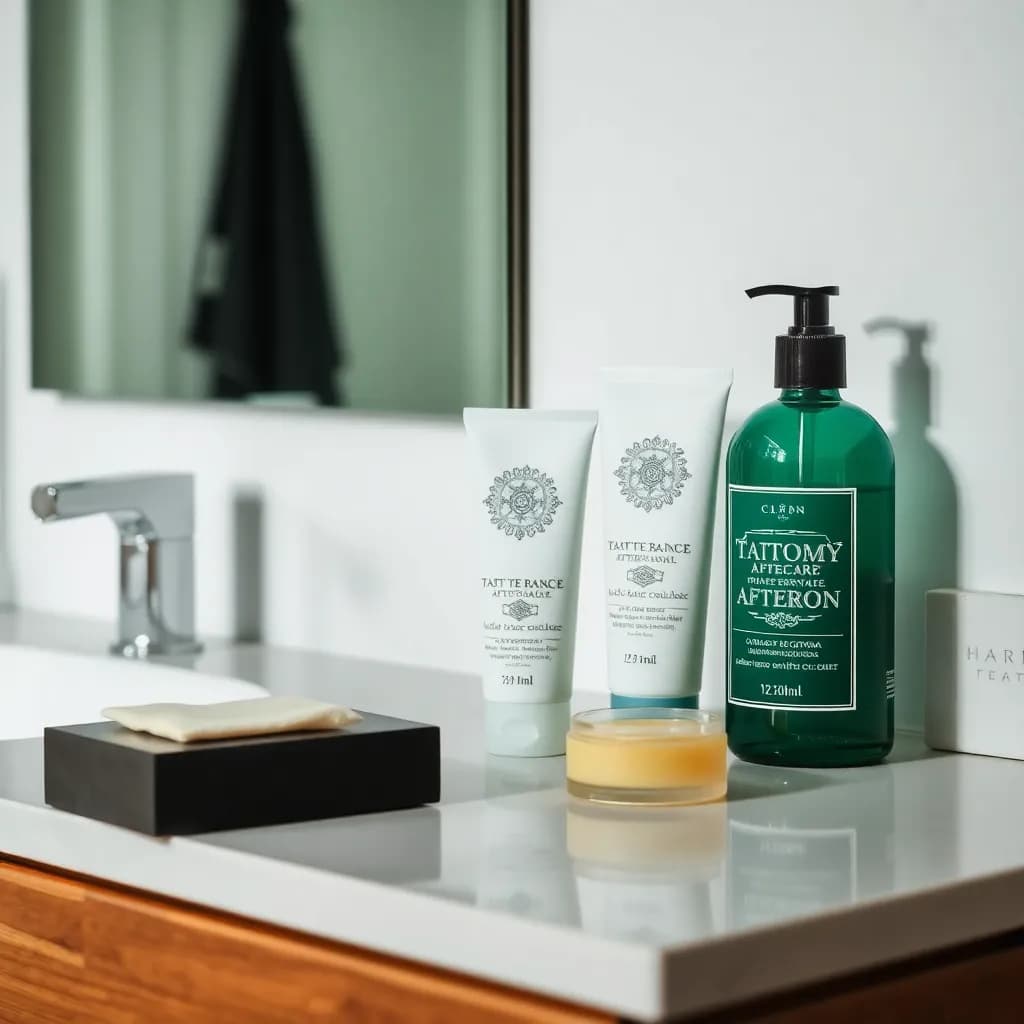 Tattoo aftercare products on bathroom counter
Best Tattoo Ointments for First 3 Days: The Critical Foundation Phase
For the first two to three days, the tattoo weeps plasma and is open to bacteria. A thin ointment keeps it from drying into thick scabs. The key word is thin: the skin should look slightly shiny, not coated.
1. Aquaphor Healing Ointment
Best for: The default choice most artists know
What the label says: The Aquaphor product page lists petrolatum 41% as the active ingredient and says the ointment is preservative-free and fragrance-free, with panthenol and glycerin. The full ingredient list published by FashionBeans (2026) adds mineral oil, ceresin, lanolin alcohol, and bisabolol.
Price: $18.37 for 14 oz on Amazon, per NBC Select (November 2025)
Pros:
- Fragrance-free and preservative-free
- Semi-occlusive, so it protects without fully sealing the skin
- Easy to find in any pharmacy
Cons:
- Contains lanolin alcohol (skip it if you have a lanolin allergy)
- Greasy and transfers to clothing and sheets
- Easy to over-apply
Brooklyn tattoo shop owner Matt Marcus told Allure that Aquaphor "forms a semi-occlusive barrier on the skin" and that most other aftercare products are variations of this formula.
How to use: Wash, pat dry, wait a few minutes, then rub in a pea-sized amount for a palm-sized tattoo. Blot off anything that still looks white.
Where to buy: Aquaphor Healing Ointment on Amazon
2. CeraVe Healing Ointment
Best for: Lanolin allergies and sensitive skin
What the label says: The CeraVe product page lists petrolatum 46.5% as the active ingredient, with ceramides NP, AP, and EOP and hydrolyzed hyaluronic acid. CeraVe states it is free of fragrance, dyes, preservatives, and lanolin, non-comedogenic, and accepted by the National Eczema Association.
Price: $11.97 for 3 oz on Amazon, per NBC Select (November 2025), which named it the best overall moisturizer
Pros:
- Lanolin-free, unlike Aquaphor and A+D
- Ceramides support the skin barrier
- Lighter feel than many ointments
Cons:
- Still petrolatum-based, if you want to avoid that
Mount Sinai dermatologist Joshua Zeichner, MD, recommended it to Allure for the period right after a tattoo, when he advises an occlusive ointment.
Where to buy: CeraVe Healing Ointment on Amazon
3. A+D Original Ointment
Best for: People who already know it works for them
What the label says: The drug label lists lanolin 15.5% and petrolatum 53.4% as active ingredients, with cod liver oil (the source of vitamins A and D), fragrance, light mineral oil, microcrystalline wax, and paraffin as inactive ingredients (Guideline Central label). It is labeled as a diaper rash ointment and skin protectant.
Pros:
- Cheap and widely sold
- Long history in tattoo aftercare
Cons:
- Contains fragrance, despite how often it is recommended as a plain ointment
- High lanolin content, a known allergen for some people
- Heavier than Aquaphor and CeraVe
My take: Earlier versions of this guide called A+D fragrance-free. The current label says otherwise. Choose Aquaphor or CeraVe unless your artist asks for A+D.
Where to buy: A+D Original Ointment on Amazon
4. Hustle Butter Deluxe
Best for: A petroleum-free, vegan balm
Price: $24.99 for 5 fl oz on Hustle Butter's site (October 2026)
What the label says: Hustle Butter describes the Deluxe balm as petroleum-free, vegan, and free of parabens and phthalates, with a "signature Hustle Butter scent." An ingredient review by My Dad the Chemist lists shea, mango, and aloe butters, coconut, sunflower, and rice bran oils, green tea, vitamin E, and mint arvensis essential oil. The brand now also sells a Fragrance-Free Tattoo Balm at the same $24.99 price, which is the better choice for fresh skin.
Pros:
- No petroleum or mineral oil
- Many artists use it as a glide during the session, so your skin has already met it
- Fragrance-free version now available
Cons:
- The original Deluxe contains scent and an essential oil
- Costs about twice as much per ounce as Aquaphor
- Tub packaging means dipping fingers into the product; use a clean spatula
Where to buy: Hustle Butter Tattoo Aftercare on Amazon or Hustle Butter Deluxe on Amazon
5. Tattoo Goo Original Salve
Best for: A small, cheap tattoo balm
Price: $7.99 for 0.75 oz, per NBC Select (November 2025), which named it the best budget balm
What the label says: NBC lists vitamin E, cocoa butter, olive oil, and herb extracts, and notes that it is not unscented.
Pros:
- Made for tattoos, petroleum-free
- Small tin travels well
Cons:
- Scented, and herb extracts can irritate sensitive skin
- Tiny size, so you will rebuy for large pieces
Where to buy: Tattoo Goo Original Salve on Amazon
6. Vanicream Moisturizing Ointment
Best for: People with many allergies
Dermatologist Debra Jaliman, MD, told Allure that she recommends this fragrance-free ointment for people who have a lot of allergies, and that its microcrystalline wax and dimethicone seal the skin while it heals.
Where to buy: Vanicream Moisturizing Ointment on Amazon
Complete Kit Option: H2Ocean Extreme Tattoo Aftercare Kit
Best for: Beginners who want one box with all three steps
What's included: Blue Green Foam Soap (1.7 oz), Aquatat Ointment (1.75 oz), and Ocean Care Moisturizer (74 g), according to a retail listing that describes the kit as fragrance-free and dye-free.
Pros:
- Soap, ointment, and moisturizer that are designed to be used in sequence
- Compact sizes for travel
Cons:
- Retail prices vary widely, and some sellers list it far above the cost of drugstore equivalents
- Small sizes may run out on a large piece
Other kits worth knowing: The Hustle Essentials Tattoo Care Kit costs $39.99 (October 2026) and contains a 1 oz balm, a 3.4 fl oz foaming soap, and a small aftercare wrap. FashionBeans named the Tattoo Goo Aftercare Kit (soap, lotion, and balm) its best kit in April 2026.
Where to buy: Search H2Ocean kits on Amazon
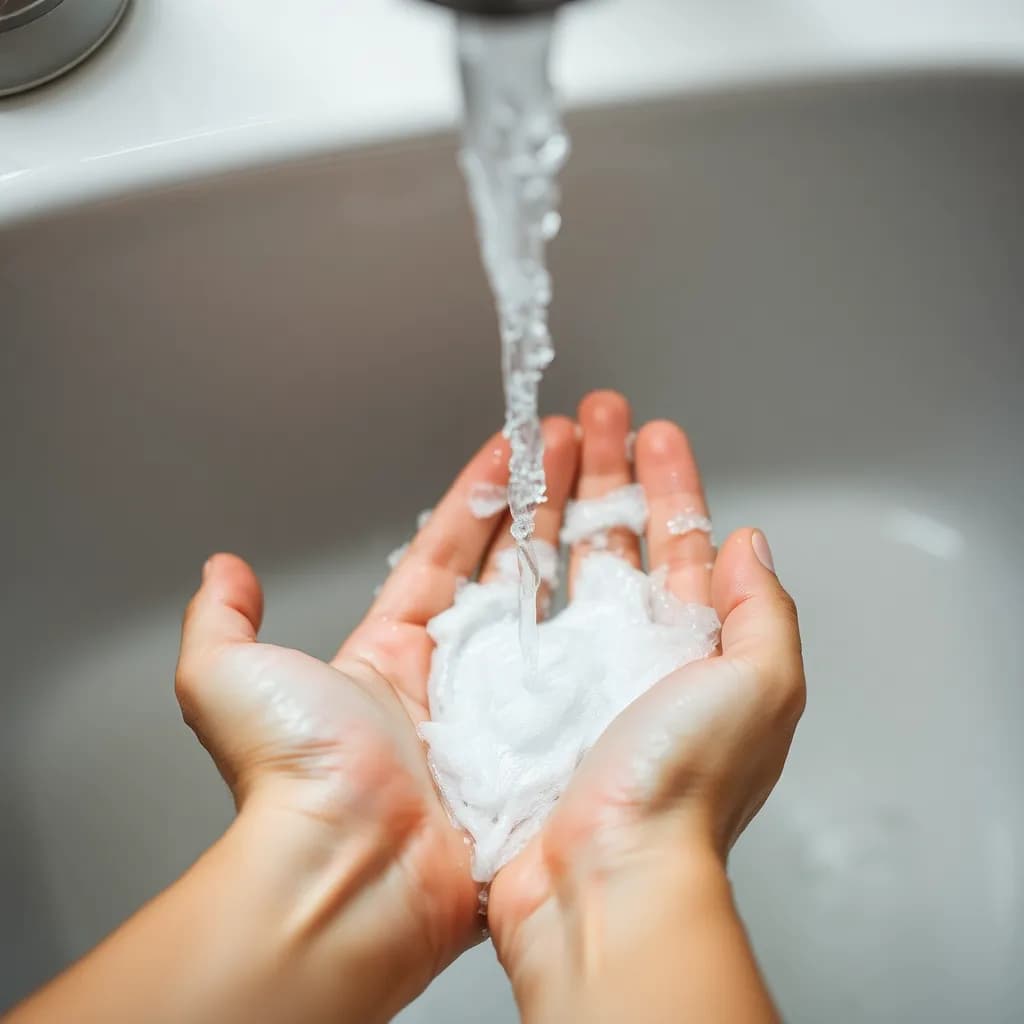 Washing hands with antibacterial soap
Second-Skin Bandages: Saniderm, Tegaderm, and Film Wraps
Many shops now finish a tattoo with a clear adhesive film instead of plastic wrap. These films are thin, transparent dressings that let the skin breathe while keeping out dirt and friction. While the film is on, you do not apply ointment under it.
How Long to Keep Saniderm On
The Saniderm FAQ gives this schedule:
| Step | How long | Notes |
|---|---|---|
| First piece | 8 to 24 hours | Always change it at the 24-hour mark to clean the area |
| Second piece | Up to 6 days | Apply to clean, dry skin |
| If it weeps into the second piece | Remove at the next 24-hour mark | Wash, then apply a third piece |
| Third piece | Up to 5 days | Only if needed |
| Maximum | 7 days total | Do not exceed |
Fluid under the first piece is normal. Replace the film early if it lifts at the edges or a large pocket of fluid builds up. A Cleveland Clinic dermatologist (2026) advises following the artist's instructions on how long to keep the area covered. Remove the film slowly under lukewarm water, pulling it parallel to the skin.
Second-Skin Product Options
| Product | What it is | Price checked |
|---|---|---|
| Saniderm | Tattoo-specific adhesive film, sold in rolls and personal packs | Varies by retailer |
| 3M Tegaderm Transparent Film | Medical dressing; NBC Select calls it sterile, microporous, and latex-free | $9.99 for a 10-pack, per NBC Select (2025) |
| Recovery Derm Shield | Waterproof, breathable film; some users dislike the adhesive | $29.59 for a 10-pack, per NBC Select (2025) |
| Hustle Butter Tattoo Aftercare Wrap | Breathable, latex-free wrap in three sizes | From $15 on Hustle Butter's site (October 2026) |
When to skip film: If you know you react to medical adhesives, ask your artist for a different wrap. Remove the film and wash the area if you see a rash along the edges, spreading redness, or the skin under it starts to smell. Films are not a reason to swim or soak; read can you swim with a new tattoo before you plan a pool day.
Where to buy: Saniderm on Amazon or Tegaderm on Amazon
Best Tattoo Lotions for Peeling Phase: When to Switch
Switch from ointment to lotion when the tattoo stops weeping and the surface starts to flake, usually around day three to five. Lotion keeps the peeling skin flexible so it falls off on its own instead of cracking. Our tattoo peeling guide explains what normal peeling looks like.
1. Lubriderm Daily Moisture Lotion (Fragrance-Free)
Best for: Large tattoos on a budget
What the label says: Lubriderm's product page describes the lotion as made with pro-ceramide, shea butter, and glycerin, free of parabens, phthalates, dyes, and fragrance, and says it won't clog pores. It is sold in 6, 16, 24, and 32 oz sizes. When I checked the page in October 2026, its ingredient panel listed mineral oil second and also included "Fragrance," which conflicts with the product name. Check the panel on the bottle you buy.
Pros:
- Large bottles at a low cost per ounce, good for sleeves and back pieces
- Lightweight texture that absorbs fast
Cons:
- Contains mineral oil, which My Dad the Chemist flags as a reason to prefer other lotions
- Label wording on fragrance needs checking
Where to buy: Lubriderm Daily Moisture Lotion on Amazon
2. Cetaphil Daily Hydrating Lotion
Best for: Oily or combination skin
What the label says: An oil-free lotion with hydrolyzed hyaluronic acid and glycerin. Retail listings describe it as fragrance-free and paraben-free. In the U.S. it is sold as "Daily Oil-Free Hydrating Lotion," so check the name and ingredients when you compare.
Pros:
- Oil-free and light, good where you sweat
- Hyaluronic acid and glycerin pull water into the skin
Cons:
- Small bottles cost more per ounce than Lubriderm
- Too light on its own for very dry skin
Where to buy: Cetaphil Daily Hydrating Lotion on Amazon
3. Aveeno Daily Moisturizing Lotion (Fragrance-Free)
Best for: The itchy part of peeling
What the label says: The fragrance-free U.S. version lists dimethicone as a skin protectant, with oat kernel flour, glycerin, and petrolatum. Aveeno's line is built around colloidal oat, which Dr. Zeichner told Allure offers both hydrating and soothing properties. The UK artist behind Tiggy Tattoos (2025) also recommends Aveeno's fragrance-free lotion to clients.
Pros:
- Oat ingredients calm itch and redness
- Recommended by both dermatologists and artists in our research
- Large bottles at drugstore prices
Cons:
- Formulas vary by country; buy the version that says fragrance-free
- Contains a little petrolatum, if you are avoiding it entirely
Where to buy: Aveeno Daily Moisturizing Lotion on Amazon
4. After Inked Tattoo Moisturizer
Best for: A tattoo-specific lotion without petroleum
What the label says: Water is the first ingredient, followed by grape seed oil and glycerin, per FashionBeans (2026), which named it the best tattoo lotion. My Dad the Chemist ranked it second of three tattoo lotions in its ingredient comparison.
Pros:
- Water-based, which fits the AAD's advice for dry tattooed skin
- No petroleum, lanolin, or mineral oil
- Vegan and cruelty-free
Cons:
- Costs more per ounce than drugstore lotions that do the same job
- Small tube for large pieces
Where to buy: After Inked Tattoo Moisturizer on Amazon
5. Hustle Butter Daily Moisturizing Lotion
Best for: Daily care of healed tattoos
Price: $21.99 for the full-size Daily Rejuvenating Lotion, or $14.99 for 3 fl oz, on Hustle Butter's site (October 2026)
Pros:
- Petroleum-free and vegan, from the same brand as the balm
- Lighter than the Deluxe balm, so it suits daily use
Cons:
- Scented, so I would save it for after the peeling phase
- Expensive for what a basic fragrance-free lotion also does
When to use: Week three onward, or on fully healed tattoos.
Where to buy: Hustle Butter Daily Lotion on Amazon or Hustle Butter Daily Moisturizing Lotion on Amazon
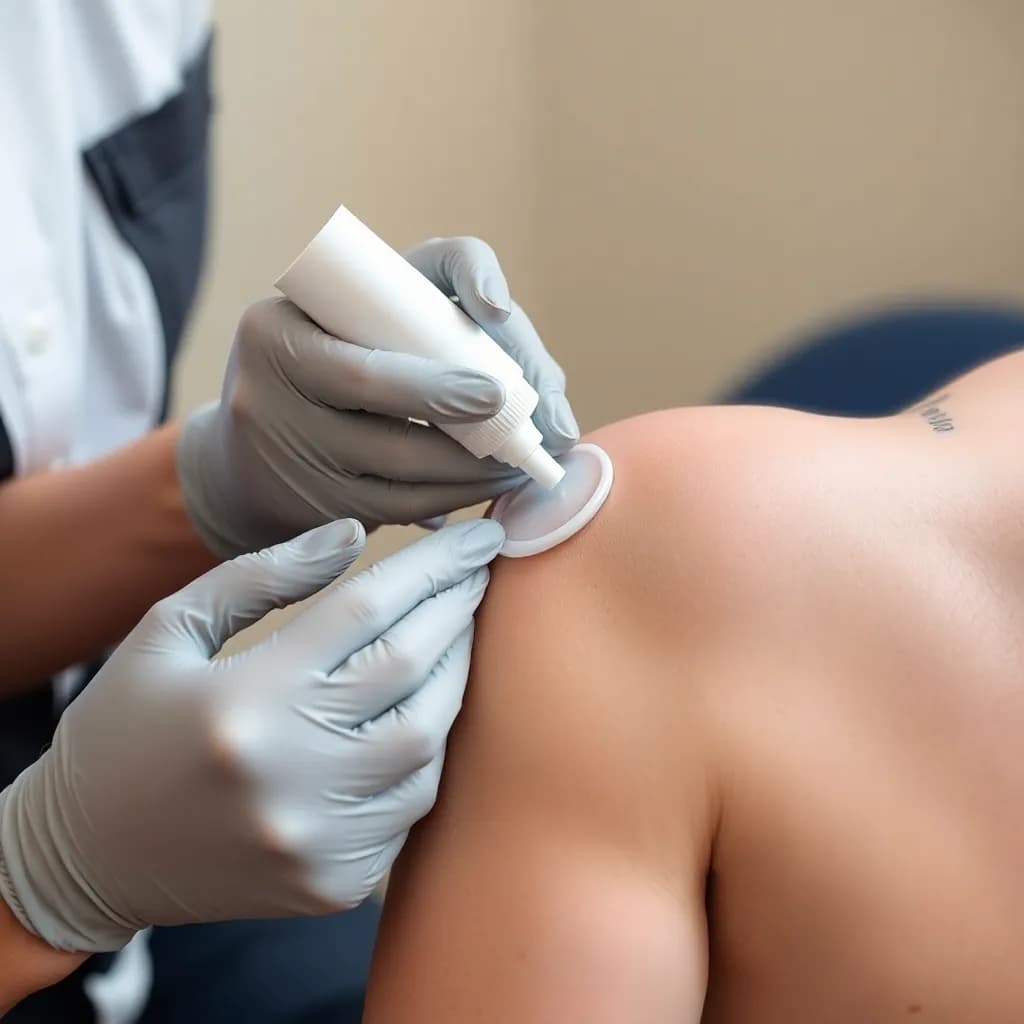 Applying lotion to healing tattoo
Sunscreen for Healed Tattoos
Sunscreen is the product that matters most over the life of a tattoo, but not during the first weeks. A Cleveland Clinic dermatologist (2026) lists applying sunscreen among the things to avoid until the tattoo heals, and advises staying out of the sun during the first month because UV rays fade ink. Keep a healing tattoo under loose clothing instead.
Once the tattoo is fully healed (no peeling, no shine, no tenderness), the American Academy of Dermatology recommends a broad-spectrum, water-resistant sunscreen with SPF 30 or higher, applied 15 minutes before you go outside and reapplied at least every two hours. The AAD also advises staying out of tanning beds.
| Sunscreen | Type | SPF | Price checked |
|---|---|---|---|
| Blue Lizard Sensitive Mineral Stick | Mineral, fragrance-free, water-resistant 80 min | 50+ | $8.77, per NBC Select (2025) |
| Native Mineral Sunscreen | Zinc oxide, unscented (may leave a white cast) | 30 | $14.25, per NBC Select (2025) |
| Hustle Butter Mineral Sunscreen Lotion | Zinc oxide, water-resistant up to 80 min, made for healed tattoos | 50 | $24.99 for 3 fl oz on Hustle Butter's site (October 2026) |
| Mad Rabbit Defend Tattoo Sunscreen | Zinc oxide | See label | Not checked |
NBC Select's experts called zinc oxide sunscreens the gentlest option for tattooed skin. A stick is the easiest format for small pieces on hands, wrists, and ankles, which see the most sun.
Where to buy: Mineral sunscreen sticks on Amazon
Product Comparison Table: Quick Reference
| Product | Type | Fragrance on label | Lanolin | Price checked | When to use |
|---|---|---|---|---|---|
| Dial Gold bar | Soap | Yes | No | Not checked | Days 1-30 (if artist recommends) |
| Dr. Bronner's Baby Unscented | Soap | No added fragrance | No | $7.69 / 8 oz | Days 1-30 |
| Tattoo Goo Soap | Soap | Check label | No | $8.99 / 3 oz | Days 1-30 |
| Cetaphil Gentle Cleanser | Cleanser | No | No | Not checked | Days 1-30 |
| Aquaphor | Ointment | No | Lanolin alcohol | $18.37 / 14 oz | Days 1-3 |
| CeraVe Healing Ointment | Ointment | No | No | $11.97 / 3 oz | Days 1-3 |
| A+D Original | Ointment | Yes | Yes (15.5%) | Not checked | Days 1-3 |
| Hustle Butter Fragrance-Free | Balm | No | No | $24.99 / 5 oz | Days 1-14+ |
| Saniderm / Tegaderm | Film | No | No | From $9.99 / 10 | Days 0-7 |
| Lubriderm Fragrance-Free | Lotion | Check label | No | Not checked | Days 4-30+ |
| Cetaphil Daily Hydrating | Lotion | No | No | Not checked | Days 4-30+ |
| Aveeno Fragrance-Free | Lotion | No | No | Not checked | Days 4-30+ |
| After Inked | Lotion | Check label | No | Not checked | Days 4-30+ |
| Mineral SPF 30-50 | Sunscreen | Varies | No | $8.77-$24.99 | Healed only |
Prices come from NBC Select (November 2025), Dr. Bronner's, and Hustle Butter (October 2026). Store prices change often, so treat them as a guide.
Natural/Organic Options: Do They Work?
Plant-based balms work for many people after the first days. The problem is not "natural" versus "synthetic." The problem is that many natural products add essential oils and scent, which are exactly what you want to avoid on fresh skin.
Coconut Oil: The Controversial Favorite
The claim: Coconut oil is antimicrobial, moisturizing, and chemical-free.
What the evidence says: Healthline (2023) notes that coconut oil could potentially clog pores and may cause blackheads in people with oily skin. It also notes that animal studies suggest coconut oil may help wound healing, but that most of the research is animal or test-tube work.
My take: Do not use plain kitchen coconut oil in the first week. It is not sterile once you have dipped fingers into the jar, and it can clog pores over a large area. Coconut oil inside a finished tattoo balm (as in Hustle Butter or Badger Tattoo Balm) is a different case, because the formula and packaging are controlled.
Shea Butter: Solid Choice for Later Healing
Shea butter is the base of most vegan tattoo balms, including Hustle Butter and the Skinfix Inked Tattoo Balm that Allure recommends. Tattoo artist Lina Shuliar told NBC Select (2025) that she looks for shea butter, vitamin E, cocoa butter, and panthenol in aftercare products.
When to use: After the weeping stops. A rich butter on a weeping tattoo can trap fluid.
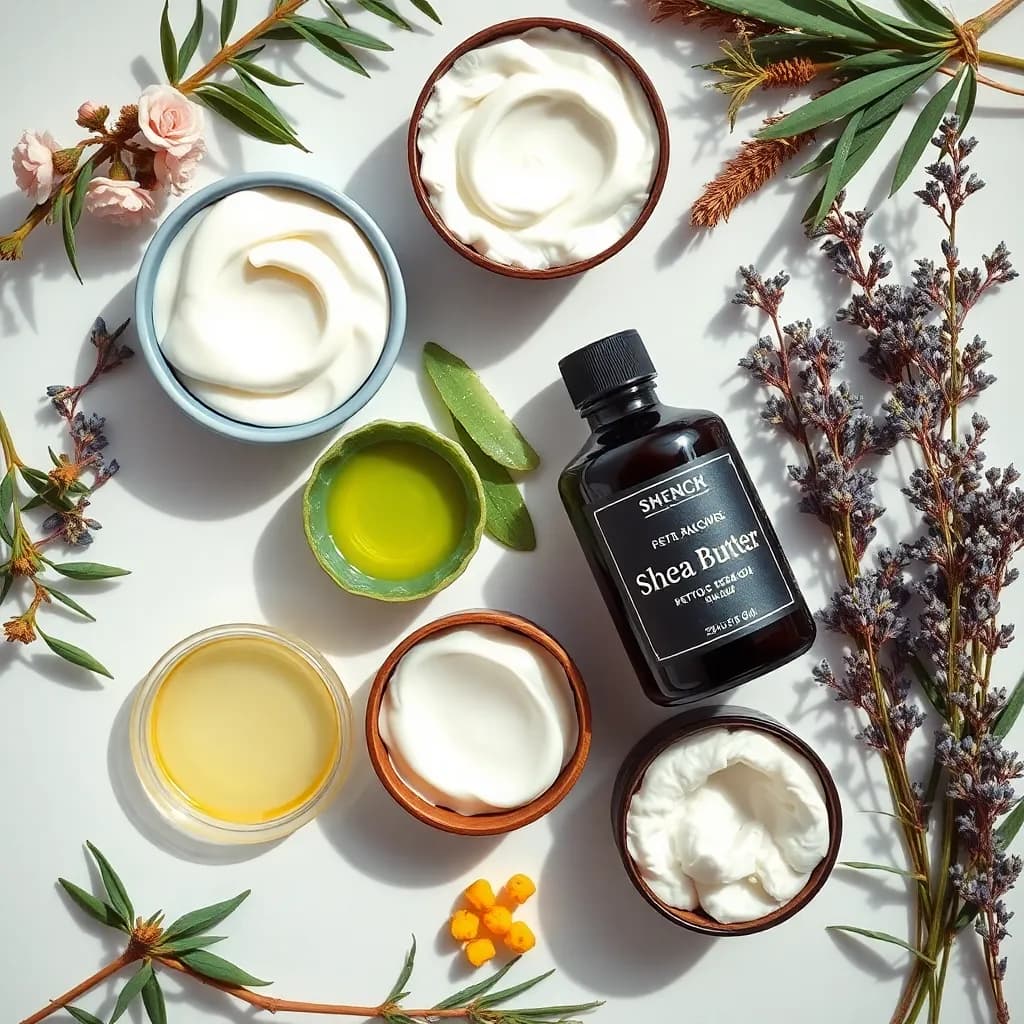 Natural aftercare ingredients
Jojoba and Other Light Oils
Jojoba appears in Dr. Bronner's soap and in several balms. Plain oils spread thinly and absorb quickly, but they do not protect a weeping wound the way an ointment does. If you like them, use a balm that contains them rather than a bottle of pure oil.
The "Natural" Products to Avoid
Essential oils applied directly: Lavender, tea tree, and mint oils are concentrated and can irritate broken skin. The artist behind Tiggy Tattoos warns that fragrance and essential oils in body butters can irritate healing skin.
Homemade mixtures: No preservatives and no quality control.
"Natural antibacterial" claims: A label claim is not a test result.
Products to AVOID: Protect Your Investment
Petroleum Jelly (Pure, Without Additives)
Why people use it: It is cheap and already in the cabinet.
The case against heavy use: The AAD says petroleum-based products such as petroleum jelly can cause ink to fade, and a Cleveland Clinic dermatologist warns that it can block pores and lead to bacterial overgrowth. The Tiggy Tattoos artist describes Vaseline as a waterproof seal that blocks airflow.
The other view: One dermatologist quoted by Allure uses plain Vaseline on fresh tattoos under a nonstick bandage. If you use it, keep the layer very thin and stop after the first days.
Neosporin and Triple Antibiotic Ointments
Why people use them: They want to prevent infection.
Why to skip them: Neomycin is a common contact allergen. A 2025 meta-analysis reported by Dermatology Times found neomycin contact allergy in 3.2% of adults across 52 patch-test studies, rising to 6.4% in North America. Rosanne Paul, DO, told NBC Select that bacitracin, neomycin, and Polysporin may be too harsh for new tattoos. An allergic rash can look like infection, which leads people to apply more ointment and make it worse.
If you think your tattoo is infected (spreading redness, heat, pus, fever), see a doctor instead of treating it yourself.
Fragranced Products of Any Kind
Healing skin does not need perfume. Check for "Fragrance," "Parfum," and the named allergens listed in the label table above. This rule removes more products than any other, including some classic recommendations like Dial Gold and A+D.
Diaper Rash and Barrier Creams
The Tiggy Tattoos artist warns against Bepanthen and Sudocrem on new tattoos. They are thick barrier creams, and some versions contain lanolin and fragrance. Zinc-heavy creams can dry the tattoo and block airflow. A+D is also labeled as a diaper rash ointment, which is one more reason I rank it below Aquaphor and CeraVe.
Exfoliating, Anti-Aging, and Medicated Products
Avoid during healing: Scrubs, AHAs, retinol, salicylic acid, benzoyl peroxide, and hydrocortisone creams (unless a doctor prescribes one).
Why: These products remove or thin the surface layer that is trying to regrow, and they can sting and inflame broken skin.
When to resume: After the tattoo has fully healed, usually six weeks or more.
Sunscreen (On Fresh Tattoos)
Why to wait: Sunscreen can irritate the micro-injuries in a new tattoo, and the Cleveland Clinic advises avoiding it until the tattoo heals. Cover the tattoo with clothing and stay in the shade instead.
When to start: After full healing, then SPF 30 or higher every time the tattoo sees sun.
Budget vs Premium: Is It Worth It?
Tattoo-specific products cost more but rarely contain anything a good drugstore product lacks. Tattoo artist Lina Shuliar told NBC Select (2025) that many expensive tattoo products are "the same or very similar to well-known commercial brands."
The Budget Route
| Product | Price checked |
|---|---|
| Dr. Bronner's Baby Unscented, 8 oz | $7.69 (Dr. Bronner's, October 2026) |
| CeraVe Healing Ointment, 3 oz | $11.97 (NBC Select, November 2025) |
| A fragrance-free drugstore lotion (Aveeno, Cetaphil, or Lubriderm) | Varies by store |
Total: about $20 plus the lotion of your choice.
Does it work? Yes. This covers every step for a small to medium tattoo.
The Mid-Range Route
Add a pack of Tegaderm film ($9.99 for 10, per NBC Select) for the first days, or swap the soap for Dove Sensitive Skin. This suits people with sensitive skin or a large piece that rubs against clothing.
The Premium Route
| Product | Price on Hustle Butter's site (October 2026) |
|---|---|
| Fragrance-Free Tattoo Balm, 5 fl oz | $24.99 |
| Foaming Tattoo Soap, 7 fl oz | $19.99 |
| Daily Rejuvenating Lotion | $21.99 |
| Mineral Sunscreen Lotion SPF 50 | $24.99 |
Total: $91.96 before shipping.
What you're paying for: Petroleum-free and vegan formulas, one brand for every step, and nicer packaging.
Is it worth it? If you want petroleum-free products or like the experience, yes. If you only want a well-healed tattoo, the budget route does the same job.
The bottom line: Product price matters less than technique. Wash gently, apply thin layers, keep the tattoo out of the sun, and do not pick.
Frequently Asked Questions
Is Aquaphor better than a tattoo-specific balm?
Not necessarily. Aquaphor is fragrance-free, cheap, and semi-occlusive, which is why it remains the most common recommendation for the first days. A tattoo balm such as Hustle Butter's fragrance-free version is a good choice if you want to avoid petroleum or lanolin, but it does not heal faster.
Is Lubriderm OK for tattoos?
Yes, for the peeling phase and for healed tattoos, if you buy the fragrance-free version and check the label. It contains mineral oil, which some people prefer to avoid. Do not use it as your only product while the tattoo is still weeping.
Can I use coconut oil on a new tattoo?
Not in the first week. Plain coconut oil may clog pores, and a jar you dip your fingers into is not clean. After the tattoo stops peeling, a small amount is fine for most people without acne-prone skin, but a fragrance-free lotion is a safer default.
How long should I use ointment before switching to lotion?
Usually two to three days, until the tattoo stops weeping and starts to flake. If your artist used Saniderm or a similar film, you skip the ointment while the film is on and move to lotion after you remove the last piece. Then moisturize two to three times a day for the next few weeks.
Can I use Vaseline on a new tattoo?
Sources disagree. The AAD says petroleum-based products can cause ink to fade, and a Cleveland Clinic dermatologist advises avoiding petroleum jelly until healing ends. If your artist tells you to use it, keep the layer very thin and use it for the first days only.
What should I not put on a new tattoo?
Skip anything with fragrance or essential oils, antibiotic ointments like Neosporin, alcohol-based products, exfoliating acids, retinol, hydrocortisone (unless prescribed), thick diaper rash creams, and sunscreen. Also avoid plain kitchen oils during the first week.
What if I'm allergic to lanolin?
Aquaphor contains lanolin alcohol and A+D contains 15.5% lanolin, so avoid both. CeraVe Healing Ointment is lanolin-free and fragrance-free, and Hustle Butter's balms are vegan, so they contain no lanolin. All of the lotions in this guide are lanolin-free as well.
When can I put sunscreen on my tattoo?
Only after it has fully healed, usually four to six weeks. Until then, keep it covered with loose clothing. After that, use a broad-spectrum SPF 30 or higher and reapply every two hours outside.
Conclusion: Your Tattoo Is Worth the Right Products
You need three products to heal a tattoo and a fourth to keep it looking sharp:
- A fragrance-free cleanser: Dr. Bronner's Baby Unscented, Cetaphil Gentle Skin Cleanser, or Dove Sensitive Skin
- A thin ointment for the first two to three days: Aquaphor, or CeraVe if you avoid lanolin (or a second-skin film instead)
- A fragrance-free lotion from the peeling phase onward: Aveeno, Cetaphil, or Lubriderm
- A mineral sunscreen once healed: SPF 30 or higher
The techniques that matter more than products:
- Wash gently with lukewarm water, and pat dry with a clean paper towel
- Apply thin layers; blot off anything that looks white
- Do not pick, scratch, or peel flakes
- Keep the tattoo out of the sun, pools, and baths until healed (see when you can shower with a new tattoo)
- Follow your artist's instructions when they differ from this guide
Spend your money on the artist, not on the aftercare shelf. The $20 drugstore route heals a tattoo as well as a $90 kit when you use it correctly.
Planning your next piece? Use our AI Tattoo Generator to explore designs, styles, and placements, then take the concepts to your artist to discuss and refine.
Still healing your current piece? Learn what to expect during the tattoo peeling phase so you know what's normal and what's cause for concern.