 Francesco Chiaramonte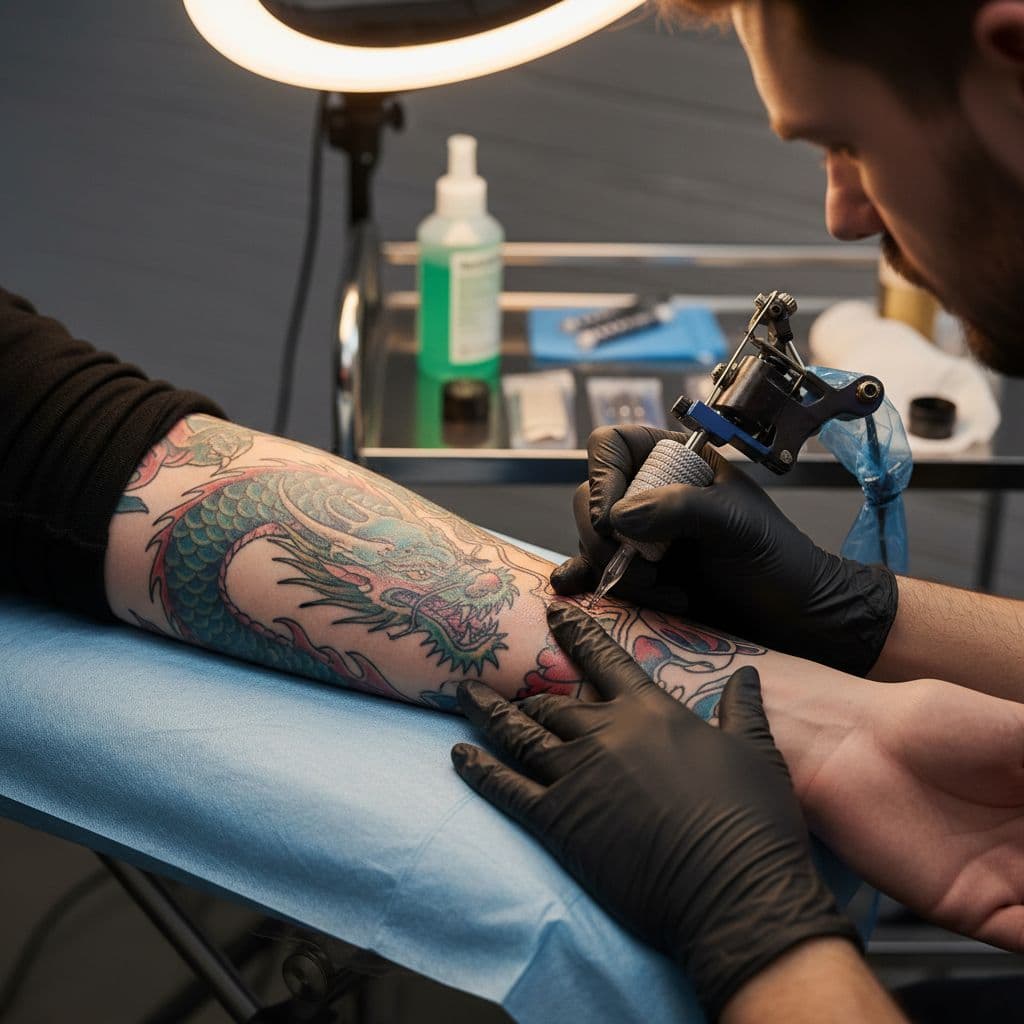
Your tattoo looked perfect when you left the studio—vibrant lines, saturated colors, crisp details. But a few weeks later, you notice some areas look patchy, lines seem lighter in spots, or the color isn't as bold as you remembered. Before you panic, know this: tattoo touch-ups are a normal, expected part of the tattoo process.
Most tattoos need at least minor touch-up work to look their best long-term. Whether you're dealing with healing complications, natural fading, or simply want to refresh an older piece, understanding when and how to get a tattoo touch-up will help you maintain your ink for years to come.
This guide covers everything you need to know about tattoo touch-ups—from recognizing when you need one to understanding costs, the actual process, and how to prevent future issues.
What Is a Tattoo Touch-Up?
A tattoo touch-up is a follow-up session where your artist goes over specific areas of an existing tattoo to improve its appearance. Unlike cover-ups (which transform an old tattoo into something new), touch-ups enhance and restore the original design.
During a touch-up session, your artist will:
- Reinforce faded or patchy lines
- Add saturation to areas where ink didn't take properly
- Correct minor blowouts or color inconsistencies
- Brighten colors that have dulled over time
- Fill in spots where the skin rejected ink during initial healing
Think of it like maintenance for your car—touch-ups keep your tattoo looking its best and prevent small issues from becoming bigger problems.
If you're still in the early stages of planning your tattoo, proper aftercare from day one can reduce the likelihood of needing extensive touch-up work.
When to Get a Tattoo Touched Up
Timing is crucial when it comes to tattoo touch-ups. Too early, and your skin hasn't finished healing; too late, and your artist may charge full price. Here's what you need to know about the optimal timeline.
The Minimum Waiting Period: 4-8 Weeks
You should wait at least 4-8 weeks before considering a touch-up. This isn't arbitrary—your skin needs time to fully heal from the initial tattooing process.
During the first month:
- The epidermis (outer skin layer) heals within 2-3 weeks
- The dermis (where ink resides) continues healing for 4-8 weeks
- Ink settles and stabilizes in its final position
- Inflammation completely subsides
Getting touched up too early can cause additional trauma to healing skin, leading to scarring, ink rejection, or prolonged healing times. According to the American Academy of Dermatology, proper healing is essential for tattoo longevity.
Signs You Need a Touch-Up
Not sure if your tattoo needs work? Look for these indicators:
Patchy or Uneven Ink:
- Areas where the color looks lighter than surrounding sections
- Spots that appear "mottled" or inconsistent
- Lines that seem broken or incomplete
Fading or Dullness:
- Colors that looked vibrant initially but now appear washed out
- Black lines that look gray instead of solid black
- White highlights that have disappeared entirely
Blowouts:
- Ink that has spread beyond the intended line boundaries
- Blurry edges where lines should be crisp
- Small "clouds" of ink around fine details
Healing Complications:
- Scarring that affects the tattoo's appearance
- Areas where scabs pulled out ink
- Spots that remained raised or textured after healing
Skin Rejection:
- Small gaps in solid color fields
- Areas where the skin appears to have "pushed out" ink
- Patches that never seemed to hold color during healing
The "Settling Period"
Many tattoos look imperfect during the healing process but improve significantly once fully healed. Peeling, scabbing, and dryness can make tattoos appear patchy when they're actually fine. That's why patience is essential—what looks like a problem at week 3 may resolve completely by week 8.
If you're currently dealing with the healing process, our tattoo peeling and scabbing guide explains what's normal versus concerning.
Common Reasons for Tattoo Touch-Ups
Understanding why tattoos need touch-ups helps set realistic expectations and can help you minimize future issues.
1. Natural Healing Variations
Every person's skin heals differently. Factors affecting how well ink holds include:
Skin Type and Condition:
- Oily skin can sometimes reject ink more readily
- Dry skin may heal faster but can crack if not moisturized properly
- Mature skin (over 50) often has different healing characteristics
Body Location:
- High-friction areas (hands, feet, fingers) almost always need touch-ups
- Areas that bend frequently (elbows, knees, wrists) experience more wear
- Spots prone to rubbing against clothing fade faster
Individual Immune Response:
- Some immune systems aggressively remove foreign particles (including tattoo ink)
- Autoimmune conditions can affect healing
- Medications may impact how skin accepts ink
2. Aftercare Complications
How you care for your tattoo during healing dramatically affects the outcome:
Over-Moisturizing:
- Suffocates the skin and can cause ink to leach out
- Increases risk of infection
- Delays proper healing
Under-Moisturizing:
- Leads to excessive scabbing
- Scabs can pull out ink when they fall off
- Causes cracking and poor color retention
Sun Exposure:
- UV radiation breaks down ink particles
- Fresh tattoos exposed to sun often heal poorly
- Even healed tattoos fade faster with sun exposure
Picking or Scratching:
- Physically removes ink from healing skin
- Can cause permanent scarring
- Creates patches that need filling in
Using the right tattoo aftercare products from the start significantly reduces the likelihood of healing-related touch-ups.
3. Artist Technique and Equipment
Sometimes touch-ups are needed due to the initial application:
Needle Depth Issues:
- Too shallow: Ink doesn't reach the dermis and falls out
- Too deep: Excessive trauma leads to blowouts and scarring
Ink Saturation:
- Under-saturation leads to patchy healing
- Different skin types require different approaches
Machine Settings:
- Voltage and needle configuration affect ink deposition
- Experienced artists adjust for different body areas
This is why choosing an experienced artist matters—a skilled professional can minimize the need for touch-ups through proper technique.
4. Skin Trauma During Healing
Life happens, and sometimes tattoos get disturbed during the critical healing phase:
- Accidental bumps or scrapes
- Sleeping on the tattoo before it's healed
- Clothing that rubs or sticks to fresh ink
- Pet interference (dogs/cats stepping on new tattoos)
- Work-related friction or impact
5. Natural Aging and Lifestyle Factors
Even perfectly healed tattoos change over time:
Sun Damage:
- The number one cause of tattoo fading
- UV rays break down ink particles that the body then removes
- Colors like yellow, white, and light blue fade fastest
Weight Fluctuations:
- Significant gain or loss can distort tattoo shapes
- Stretching may require touch-ups to restore proportions
Aging Skin:
- Skin loses elasticity over time
- Tattoos may blur slightly as skin texture changes
- Touch-ups can refresh older work
Lifestyle Factors:
- Frequent swimming (chlorine/salt water)
- Jobs with chemical exposure
- Certain medications
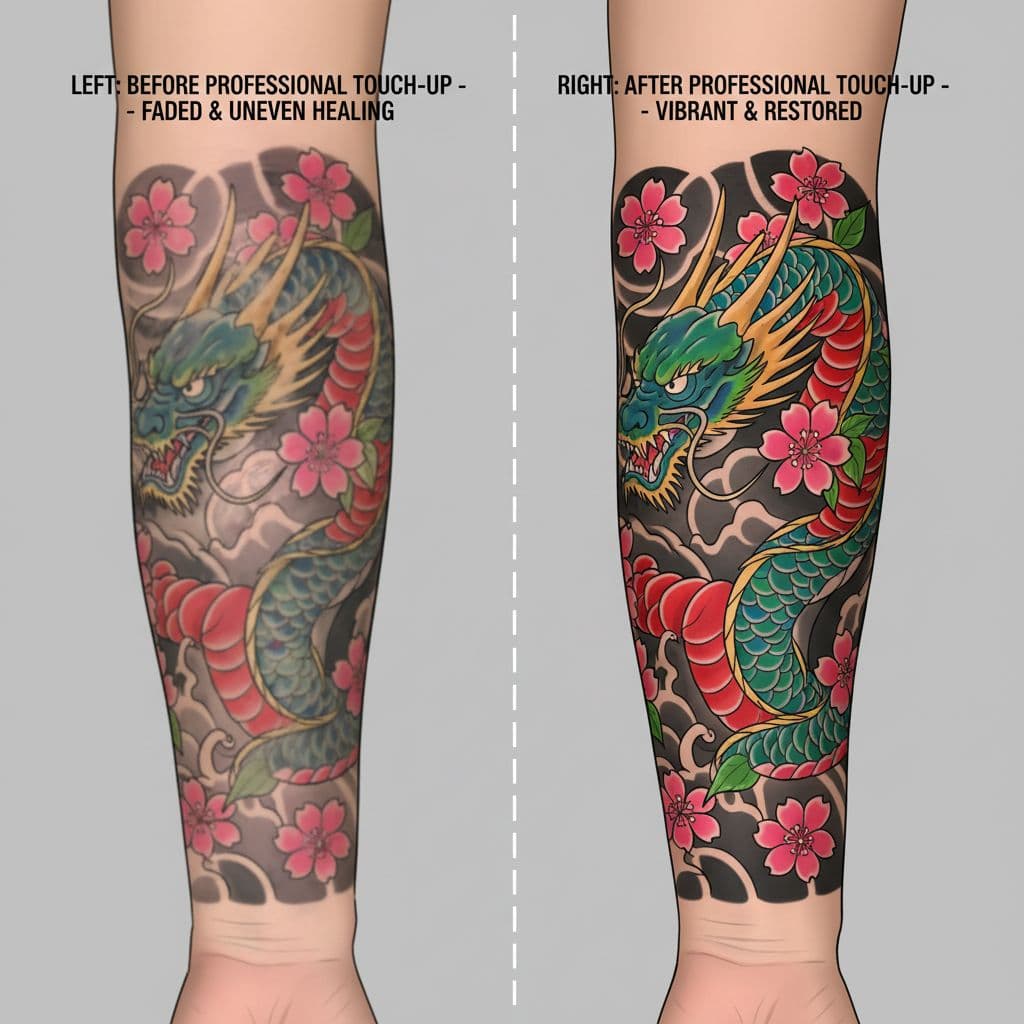 Tattoo healing comparison showing before and after touch-up
The Touch-Up Process: What to Expect
If you've never had a tattoo touched up, you might wonder how the process differs from getting the original tattoo. Here's what happens during a touch-up session.
Consultation and Assessment
Before any needles touch your skin, your artist will:
- Examine the tattoo under good lighting to identify all areas needing work
- Discuss your concerns and ensure you both agree on what needs attention
- Explain the approach for addressing each issue
- Estimate the time required based on the extent of work needed
Be specific about what bothers you, but also trust your artist's professional assessment—they may spot issues you haven't noticed or explain why certain "imperfections" are actually normal.
Preparation
The setup is similar to your original session:
- The area is cleaned and shaved if necessary
- Stencil may be applied for line work corrections
- You'll be positioned comfortably to allow good access
- Protective barriers and sterile equipment are used
The Touch-Up Procedure
For Line Work:
- Artist traces over faded lines with the appropriate needle
- May use single needles for fine details
- Multiple passes may be needed for very faded areas
For Color/Saturation:
- Small needles fill in patchy spots
- Color matching ensures consistency with surrounding areas
- Multiple layers may be needed for proper saturation
For Blowouts:
- Limited options exist—blowouts can't be completely erased
- Artist may add surrounding detail to camouflage
- Laser removal is sometimes an alternative for severe cases
Pain Level: Is It Worse Than the Original?
Many people report that touch-ups hurt more than the original tattoo, but experiences vary:
Factors that may increase discomfort:
- Scar tissue from initial healing is often more sensitive
- The psychological factor—knowing what to expect
- Shorter sessions mean less time to adjust to the sensation
Factors that may decrease discomfort:
- Smaller areas being worked on
- Familiarity with your artist and the environment
- No anxiety about the unknown
The good news? Touch-up sessions are typically much shorter than original tattoo sessions—often 30 minutes to 2 hours instead of multiple hours.
Healing After a Touch-Up
Touch-ups heal similarly to original tattoos, though the process is often faster:
Timeline:
- Days 1-3: Redness, slight swelling, possible plasma weeping
- Days 4-7: Peeling and light scabbing
- Days 7-14: Flaking subsides, itching decreases
- Days 14-21: Surface appears healed
- Weeks 4-6: Full healing complete
Aftercare Differences: Touch-up aftercare is essentially the same as initial tattoo aftercare, with one key consideration: since you're working on a smaller area, it's easier to over-moisturize. Use the thinnest layer possible of recommended ointment.
Follow the same complete aftercare protocol you used for your original tattoo.
Tattoo Touch Up Cost: What You'll Pay
One of the most common questions is whether touch-ups are free. The answer depends on several factors.
Free Touch-Ups: When Artists Don't Charge
Many reputable artists offer free touch-ups within a specific timeframe, typically:
Standard Policy:
- Free within 3-6 months of the original tattoo
- Limited to work performed by that artist
- Covers normal healing issues, not damage from poor aftercare
- May have a time limit (e.g., 1-hour maximum)
What's Usually Covered:
- Patchy ink that didn't take properly
- Minor blowouts from the original application
- Normal fading during initial healing
- Small gaps or inconsistencies
What's Usually NOT Covered:
- Damage from picking, scratching, or sun exposure
- Areas affected by improper aftercare
- Work on tattoos done by other artists
- Touch-ups requested after the free window closes
- Major additions or design changes
When You'll Pay for Touch-Ups
Extended Timeline: If you wait longer than the free period (usually 3-6 months), expect to pay. Artists' schedules fill up, and returning specifically for your touch-up takes time they could spend on new clients.
Different Artist: Touching up another artist's work almost always costs money—artists are essentially fixing someone else's work and taking responsibility for the result.
Significant Work: If your touch-up requires extensive time (multiple hours), even the most generous free policy may not cover it completely.
Design Changes: Adding elements, changing colors significantly, or expanding the tattoo moves from "touch-up" to "new work" territory.
Typical Touch-Up Pricing
When payment is required, costs vary widely:
Minimum Charges:
- Small touch-ups: $50-$100 minimum shop fee
- Covers setup time, supplies, and sterilization costs
Hourly Rates:
- Many artists charge their standard hourly rate for larger touch-ups
- Range: $100-$300+ per hour depending on artist and location
Complex Corrections:
- Fixing significant blowouts or scarring: $200-$500+
- Color corrections on older tattoos: $150-$400 per session
- May require multiple sessions
Factors Affecting Cost:
- Artist experience and reputation
- Geographic location (major cities cost more)
- Complexity of the work needed
- Time since original tattoo
- Size of area requiring attention
Questions to Ask About Pricing
Before scheduling your touch-up, clarify:
- "Is this touch-up covered under your free policy?"
- "What's your free touch-up timeframe?"
- "If I need to reschedule, does that affect the free period?"
- "Are there any limitations on free touch-up time?"
- "What happens if we discover more issues than expected during the session?"
Getting clarity upfront prevents awkward conversations and unexpected bills.
How to Prepare for a Tattoo Touch-Up
Proper preparation ensures your touch-up session goes smoothly and heals well.
Before Your Appointment
Timing:
- Schedule at least 4-8 weeks after your original tattoo healed
- Avoid scheduling during vacations or busy periods when aftercare might be compromised
- Don't book before events where you want the tattoo to look perfect (healing takes time)
Physical Preparation:
- Get good sleep the night before
- Eat a solid meal 1-2 hours before your appointment
- Stay hydrated—well-hydrated skin takes ink better
- Avoid alcohol for 24 hours (thins blood and affects healing)
- Don't take blood-thinning medications if possible (check with your doctor)
Skin Preparation:
- Moisturize the area regularly in the days leading up to your appointment
- Don't shave the area yourself—your artist will do this to avoid irritation
- Avoid sunburn or tanning beds
- Don't apply any products to the tattoo area on the day of your appointment
Documentation:
- Take clear photos of the areas you're concerned about
- Note when you first noticed the issues
- Be honest about your aftercare routine
What to Bring
- Photo ID (required by most shops)
- Comfortable clothing that allows easy access to the tattoo
- Entertainment (phone, book, headphones) for longer sessions
- Payment method
- Water and light snacks
Mental Preparation
- Set realistic expectations—not every issue can be perfectly fixed
- Understand that blowouts have limited solutions
- Trust your artist's professional judgment
- Remember that healing will take time—you won't see final results immediately
Aftercare for Touch-Up Work
Touch-up aftercare follows the same principles as initial tattoo aftercare, with a few nuances.
The Basics (Same as Original)
First 24 Hours:
- Keep the bandage on for the time specified by your artist (2-6 hours, or 3-5 days for second-skin dressings)
- Wash gently with unscented soap
- Pat dry—don't rub
- Apply a thin layer of recommended ointment
Days 2-7:
- Wash 2-3 times daily
- Apply thin layers of ointment or aftercare product
- Don't pick at scabs or peeling skin
- Wear loose, breathable clothing
Weeks 2-4:
- Switch from ointment to unscented lotion
- Continue avoiding sun exposure
- Keep moisturizing until fully healed
Key Differences from Initial Aftercare
Smaller Area, Same Attention: Since touch-ups often cover smaller areas, it's tempting to slack on aftercare. Don't—those small patches need the same careful attention as a full tattoo.
Scar Tissue Considerations: If your touch-up involves going over scarred areas:
- Healing may take slightly longer
- The area might be more sensitive
- Extra moisturizing helps prevent additional scarring
Overlapping Old and New: The junction between touched-up areas and original healed tattoo requires care:
- Don't over-moisturize trying to "blend" the areas
- Let each section heal according to its needs
- Avoid scrubbing the boundary area
Products for Touch-Up Aftercare
The same high-quality products that work for initial tattoos work for touch-ups:
First Week:
- Aquaphor or A+D Ointment (thin layers)
- Specialized tattoo aftercare balms
After Peeling:
- Unscented lotions (Lubriderm, Cetaphil)
- Tattoo-specific moisturizers
Long-term Maintenance:
- Sunscreen (SPF 30+) whenever the tattoo is exposed
- Regular moisturizing to maintain vibrancy
For product recommendations, see our guide to the best tattoo aftercare products.
Prevention: How to Minimize the Need for Touch-Ups
While some touch-ups are inevitable, you can significantly reduce the likelihood of needing extensive work.
Choose Your Artist Carefully
Research Their Touch-Up Rate:
- Ask how often their clients need touch-ups
- Look at healed photos, not just fresh work
- Read reviews mentioning long-term results
Experience Matters:
- Artists with years of experience understand different skin types
- They know how to adjust technique for various body areas
- Better equipment and ink knowledge leads to better retention
Optimize Your Health Before Tattooing
Physical Readiness:
- Be well-rested before your appointment
- Eat a solid meal beforehand
- Stay hydrated in the days leading up to your session
- Avoid alcohol and blood thinners
Skin Condition:
- Don't get tattooed on sunburned skin
- Moisturize regularly leading up to your appointment
- Avoid harsh exfoliants that might sensitize the skin
Master Your Aftercare Routine
The first 2-4 weeks determine how well your tattoo heals. Follow these proven practices:
The Golden Rules:
- Keep it clean but not overwashed
- Moisturize enough to prevent cracking, not so much that it's greasy
- Never pick, scratch, or rub healing tattoos
- Avoid sun exposure completely during healing
- Sleep on clean sheets and avoid sleeping on the tattoo
- Wear loose, clean clothing that won't stick
Common Mistakes to Avoid:
- Using scented products (soaps, lotions, detergents)
- Soaking in baths, pools, or hot tubs
- Letting pets sleep on or near healing tattoos
- Exposing fresh ink to direct sunlight
- Wearing tight clothing over new tattoos
- Working out and getting excessively sweaty too soon
Long-Term Care for Tattoo Longevity
Sun Protection (Critical):
- Apply SPF 30+ sunscreen whenever your tattoo is exposed
- Reapply every 2 hours during extended sun exposure
- Consider clothing with UPF protection for heavily tattooed areas
Moisturize Regularly:
- Healthy, hydrated skin holds ink better
- Dry skin makes tattoos look dull
- Daily lotion application becomes part of tattoo maintenance
Maintain Stable Weight:
- Significant fluctuations can distort tattoo shapes
- Gradual changes are less problematic than rapid gain/loss
Consider Touch-Ups Part of Tattoo Ownership:
- Plan for periodic refreshers, especially for color work
- Budget for maintenance touch-ups every 5-10 years
- Address small issues before they become bigger problems
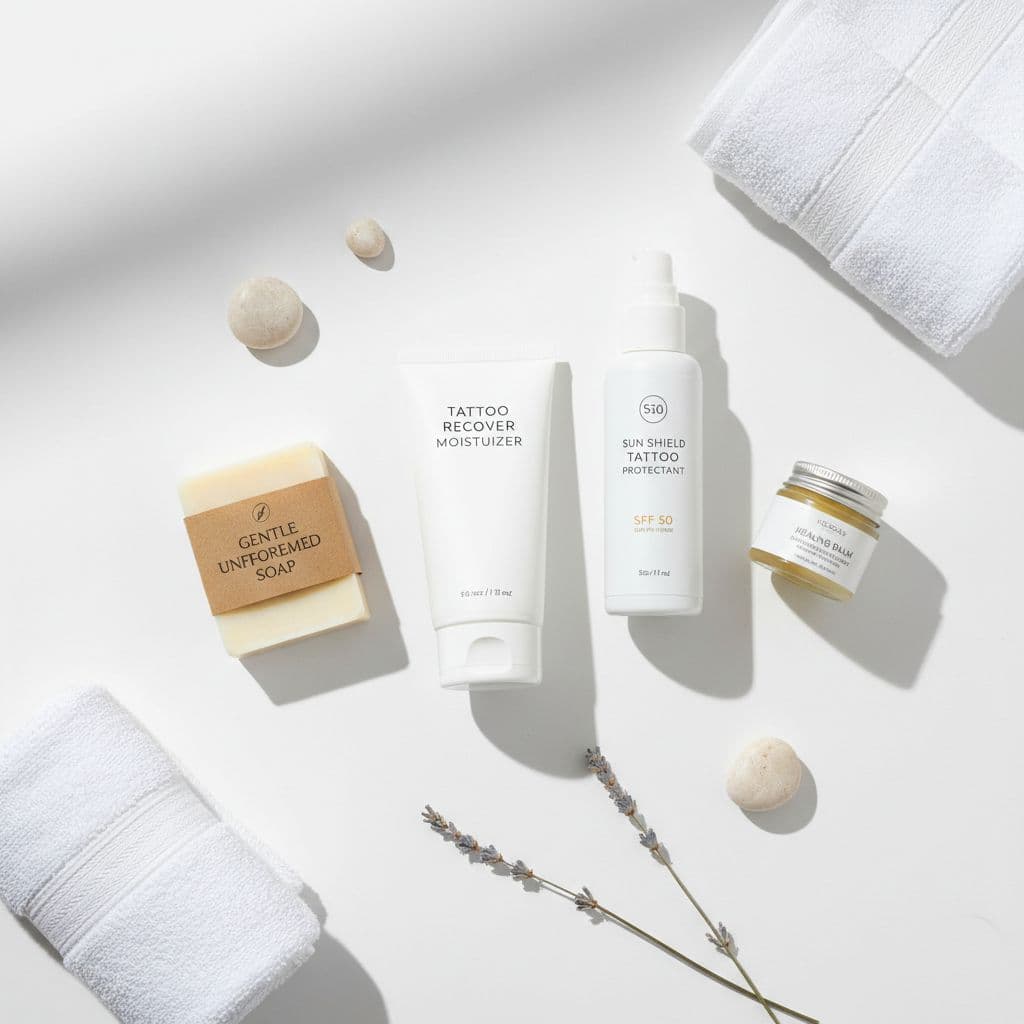 Tattoo aftercare products including moisturizer and sunscreen
When Touch-Ups Aren't the Answer
Sometimes, what seems like a touch-up issue actually requires a different approach.
Cover-Ups vs. Touch-Ups
If your tattoo has fundamental design issues, significant scarring, or blowouts that can't be corrected, a cover-up might be more appropriate. Cover-ups transform existing tattoos into new designs, often incorporating the old work.
Laser Removal Considerations
For severe blowouts, unwanted tattoos, or poorly executed work that can't be fixed, laser tattoo removal might be worth considering. Modern lasers can significantly fade or remove tattoos, though the process is expensive and time-consuming.
Living With Imperfections
Not every tattoo flaw needs fixing. Some imperfections add character, tell a story, or are only noticeable to you. Before pursuing touch-ups, consider whether the issue truly bothers you or if you're over-analyzing.
Final Thoughts on Tattoo Touch-Ups
Tattoo touch-ups are a normal, expected part of the tattoo process—not a sign of failure by you or your artist. Most tattoos benefit from at least minor refinement once fully healed, and understanding this from the start helps set realistic expectations.
Key Takeaways:
- Wait 4-8 weeks minimum before considering a touch-up
- Most reputable artists offer free touch-ups within 3-6 months
- Aftercare quality directly impacts whether you'll need extensive touch-ups
- Sun protection is the single most important factor in long-term tattoo appearance
- Touch-up aftercare follows the same rules as initial tattoo aftercare
- Some issues (like blowouts) have limited solutions
Your tattoo is an investment in art that lives on your body. Taking care of it—from choosing the right artist through proper aftercare and maintenance touch-ups—ensures you'll enjoy that art for decades to come.
If you're planning a new tattoo and want to minimize the chance of needing touch-ups, start with proper planning and follow our complete aftercare guide from day one. For specific questions about the healing process, our peeling and scabbing guide has detailed answers.
Frequently Asked Questions
How long should I wait before getting a touch-up? Wait at least 4-8 weeks for your tattoo to fully heal before scheduling a touch-up. Getting work done too early can damage healing skin and make matters worse.
Are tattoo touch-ups free? Many artists offer free touch-ups within 3-6 months of the original work, but policies vary. Always clarify with your artist before assuming.
Do all tattoos need touch-ups? Most tattoos benefit from at least minor touch-up work, but the extent varies. Solid blackwork often needs less than color pieces, and location on the body makes a big difference.
Do touch-ups hurt more than the original tattoo? Many people find touch-ups more uncomfortable due to scar tissue and psychological factors, but sessions are typically much shorter.
Can blowouts be fixed with touch-ups? Blowouts can sometimes be camouflaged but not completely erased. Severe blowouts may require laser treatment or cover-up work.
How much do tattoo touch-ups cost? Free (if within the artist's policy window), or $50-$300+ depending on the extent of work, artist rates, and whether you're using the original artist.
Ready to plan your next tattoo? Try our AI Tattoo Generator to visualize your design before committing to ink.
Sources: