 Francesco Chiaramonte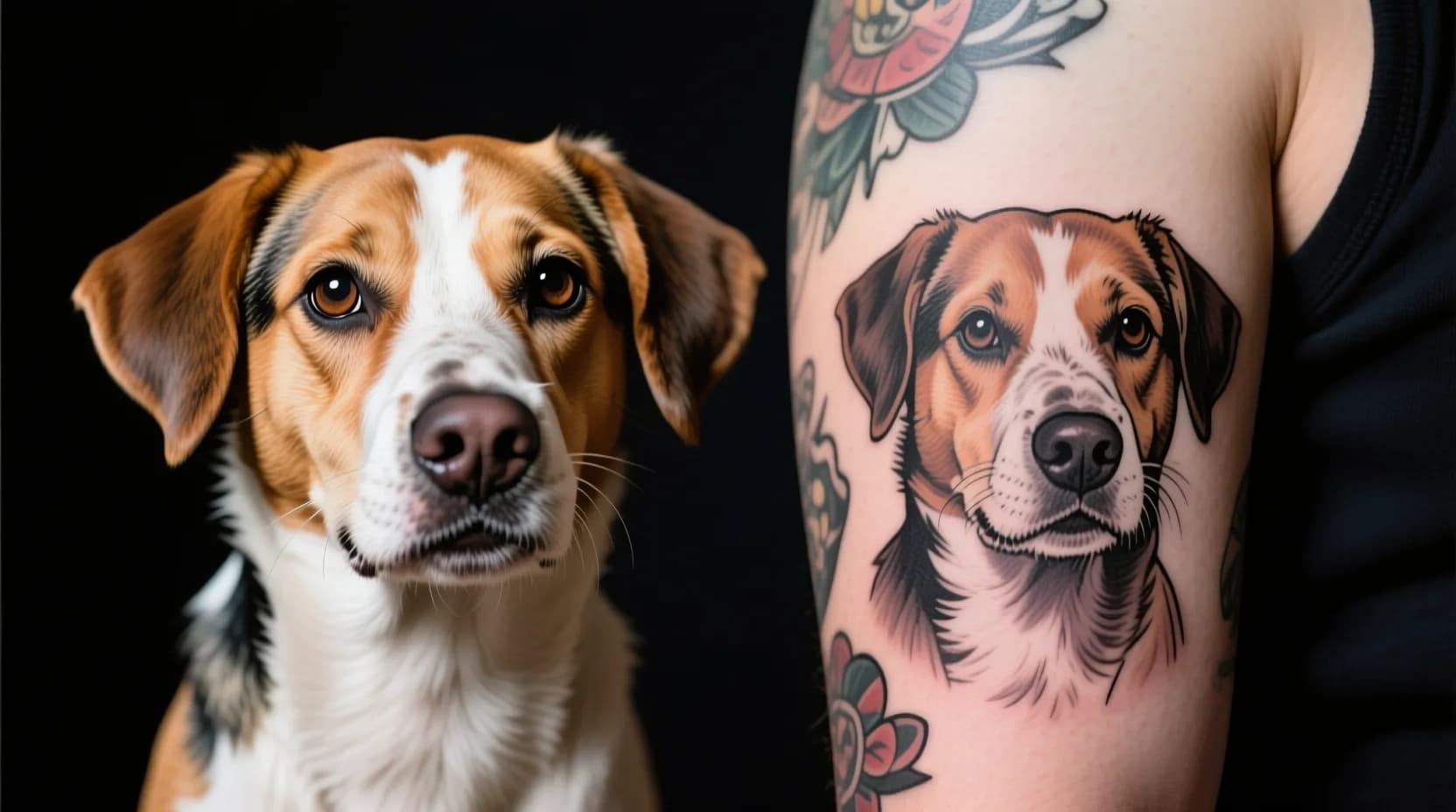
Introduction
Pet portrait tattoos honor the companions who shaped our lives. Whether your pet is still with you or you're memorializing a loss, a well-executed pet tattoo captures personality, not just appearance. This guide walks you through how to prepare your photo, choose the right style, and collaborate with a tattoo artist for a design you'll love forever.
If you want a quick preview before booking, try the photo to tattoo converter to generate a stencil from your pet's photo.
Step 1: Choose the Right Photo
The photo you choose determines 80% of the tattoo's success. Look for:
Do:
- Clear, well-lit images (natural light is best)
- Photos that show your pet's personality
- Sharp focus on the face and eyes
- Simple or blurred backgrounds
Avoid:
- Blurry or pixelated images
- Heavy shadows across the face
- Multiple pets in the same frame (unless that's the design)
- Overly filtered or edited photos
If you only have low-quality photos, consider combining multiple references or asking your artist to reconstruct details.
Step 2: Pick a Style That Fits
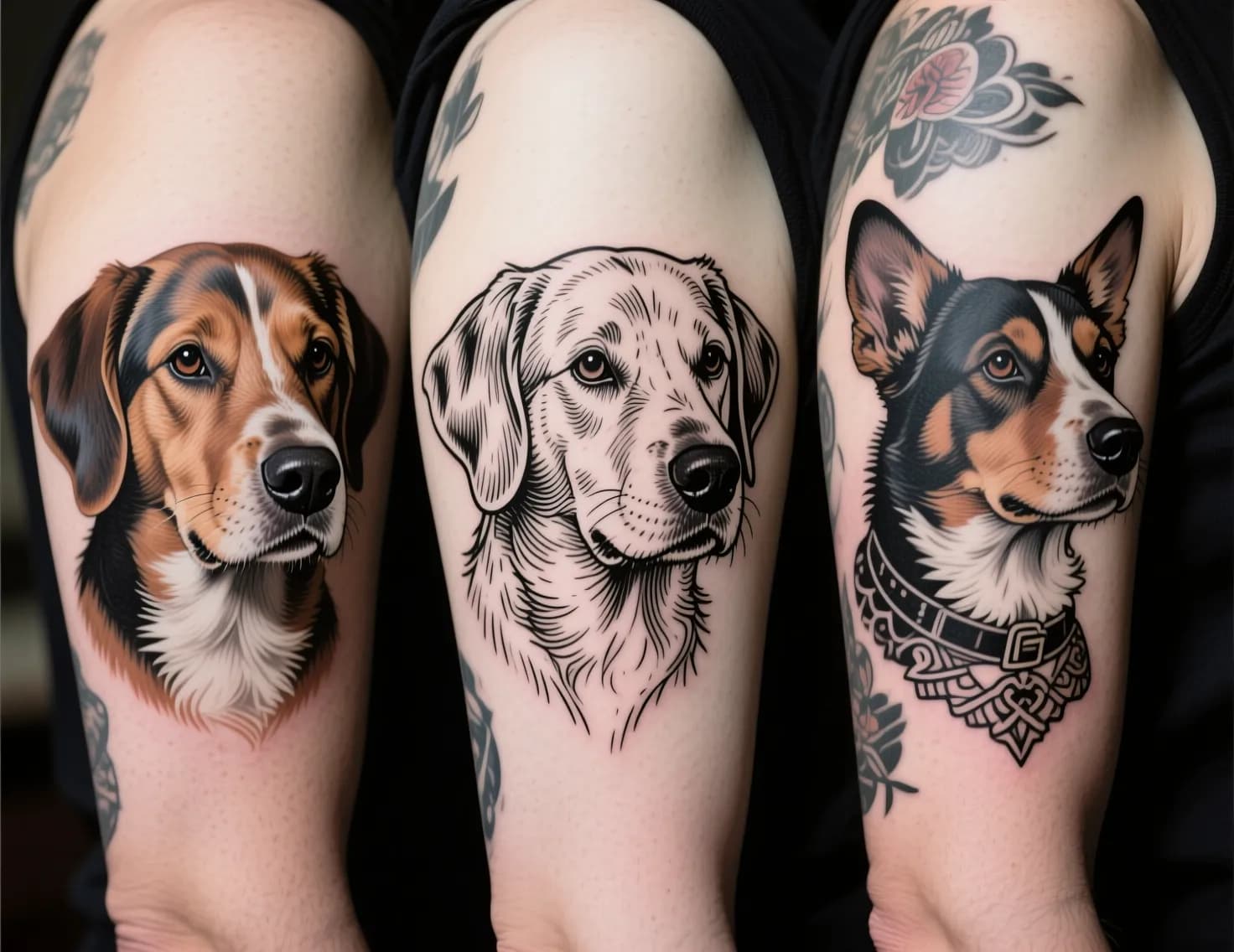 Different pet portrait tattoo styles
Pet portraits work in multiple tattoo styles. Choose based on how realistic vs. stylized you want the result:
Realism
The most lifelike option. Captures fur texture, eye depth, and subtle shading. Best for larger placements (4+ inches).
Black & Grey
Classic, timeless look. Ages well and works on all skin tones. Good for medium-to-large pieces.
Fine Line
Delicate, minimalist aesthetic. Works well for smaller tattoos but may lack detail for fluffy or complex coats.
Illustrative / Neo-Traditional
Stylized with bold outlines and color. Great if you want a tattoo that looks like art, not a photo.
Watercolor
Soft, painterly edges with color splashes. Can be combined with linework for a unique effect.
For deeper comparison, read best portrait tattoo styles.
Step 3: Consider the Fur and Texture
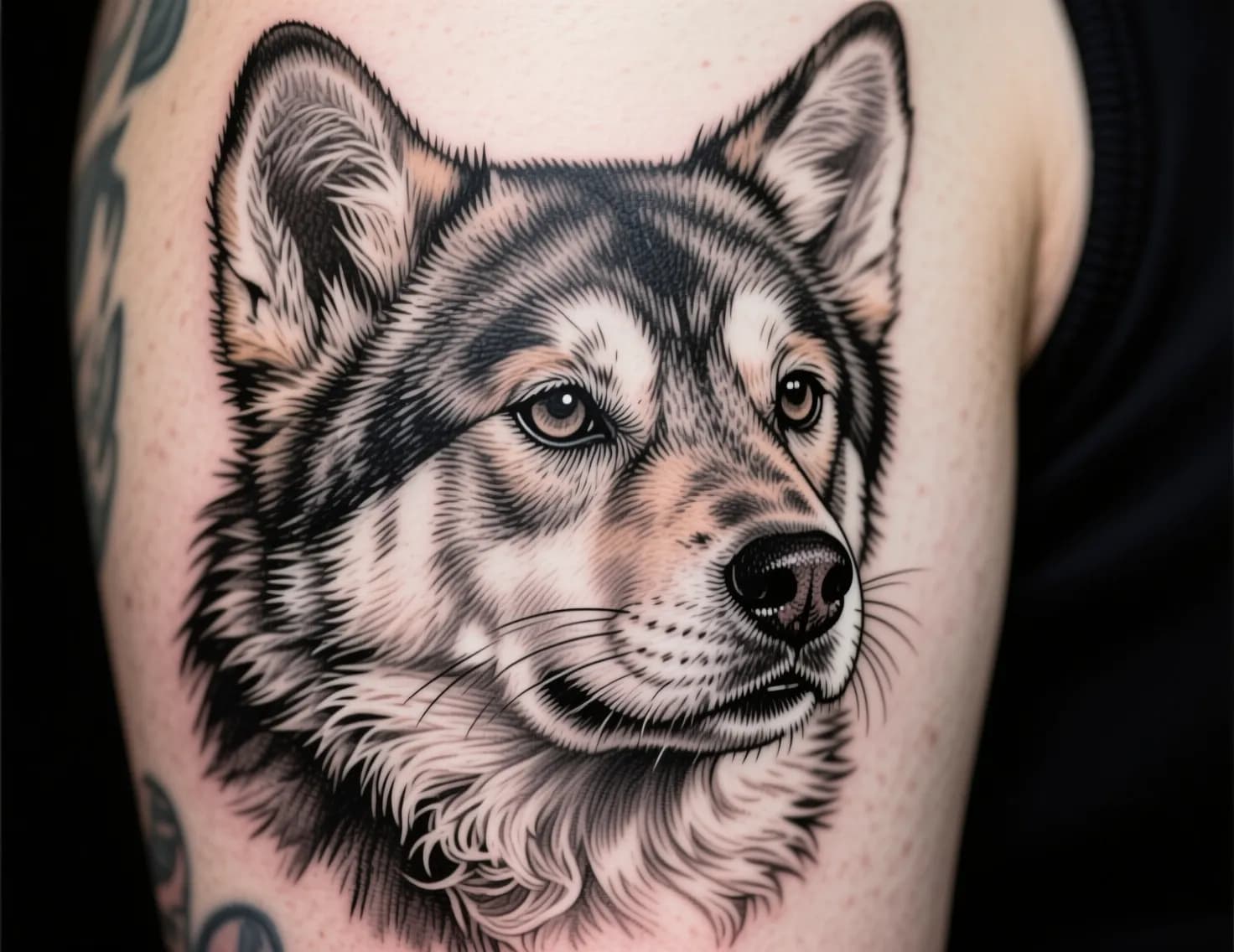 Detailed fur texture in pet portrait tattoo
Pets are harder to tattoo than humans because of fur. Different coats require different techniques:
- Short-haired pets (labs, beagles): Smooth shading, minimal texture
- Long-haired pets (golden retrievers, persians): Detailed linework for fur direction
- Curly or wiry coats (poodles, terriers): Stylized approaches often work better than strict realism
- Exotic pets (birds, reptiles): Feathers and scales need specialized artists
Ask your artist if they have experience with your pet's coat type.
Step 4: Decide on Composition
A pet portrait doesn't have to be just a face. Consider:
- Head only: Classic, works well in small-to-medium sizes
- Full body: Better for action poses or capturing personality
- With elements: Flowers, frames, name banners, paw prints
- Abstract background: Geometric shapes, watercolor splashes, negative space
Bring reference images of compositions you like. Your artist can adapt them.
Step 5: Use AI to Preview Your Design
Before you book, generate a preview using the Image to Tattoo Converter. This helps you:
- Test how your photo translates to linework
- Compare different style outputs
- Bring a clear reference to your consultation
This doesn't replace the artist's work—it helps you arrive with direction.
Step 6: Find the Right Artist
Not every tattoo artist does pet portraits well. When searching:
- Look for pet portraits specifically in their portfolio
- Check for healed photos, not just fresh tattoos
- Ask about their experience with your pet's breed or species
- Read reviews mentioning portrait work
Don't settle. A pet portrait is permanent—wait for the right artist.
Step 7: Prepare for Your Appointment
Bring:
- Multiple reference photos (different angles help)
- Your AI-generated preview or sketch ideas
- Notes on what matters most (the eyes, the ears, the expression)
Discuss:
- Size and placement recommendations
- How much detail is realistic for the size
- Timeline and session count for larger pieces
Common Mistakes to Avoid
- Going too small: Details blur and fade. Trust your artist's size recommendations.
- Using bad photos: If the reference is unclear, the tattoo will be too.
- Rushing the artist: Portrait work takes time. Don't push for a quick turnaround.
- Skipping the consultation: Always meet or video call before committing.
Memorial Pet Tattoos
If you're memorializing a pet who passed, take your time with the process. Consider:
- Adding dates, names, or meaningful symbols
- Choosing a placement that feels right (close to the heart, visible daily, etc.)
- Working with an artist who understands the emotional weight
For more on memorial tattoos, read how to turn a picture of a loved one into a tattoo.
Final Thoughts
Pet portrait tattoos are deeply personal. When you pair a great photo with the right style and a skilled artist, you get a piece that captures your pet's spirit—not just their appearance.
Start by testing your photo with the photo to tattoo converter, then find an artist who specializes in the style you love.
Your pet deserves a tattoo as unique as they were.