 Francesco Chiaramonte
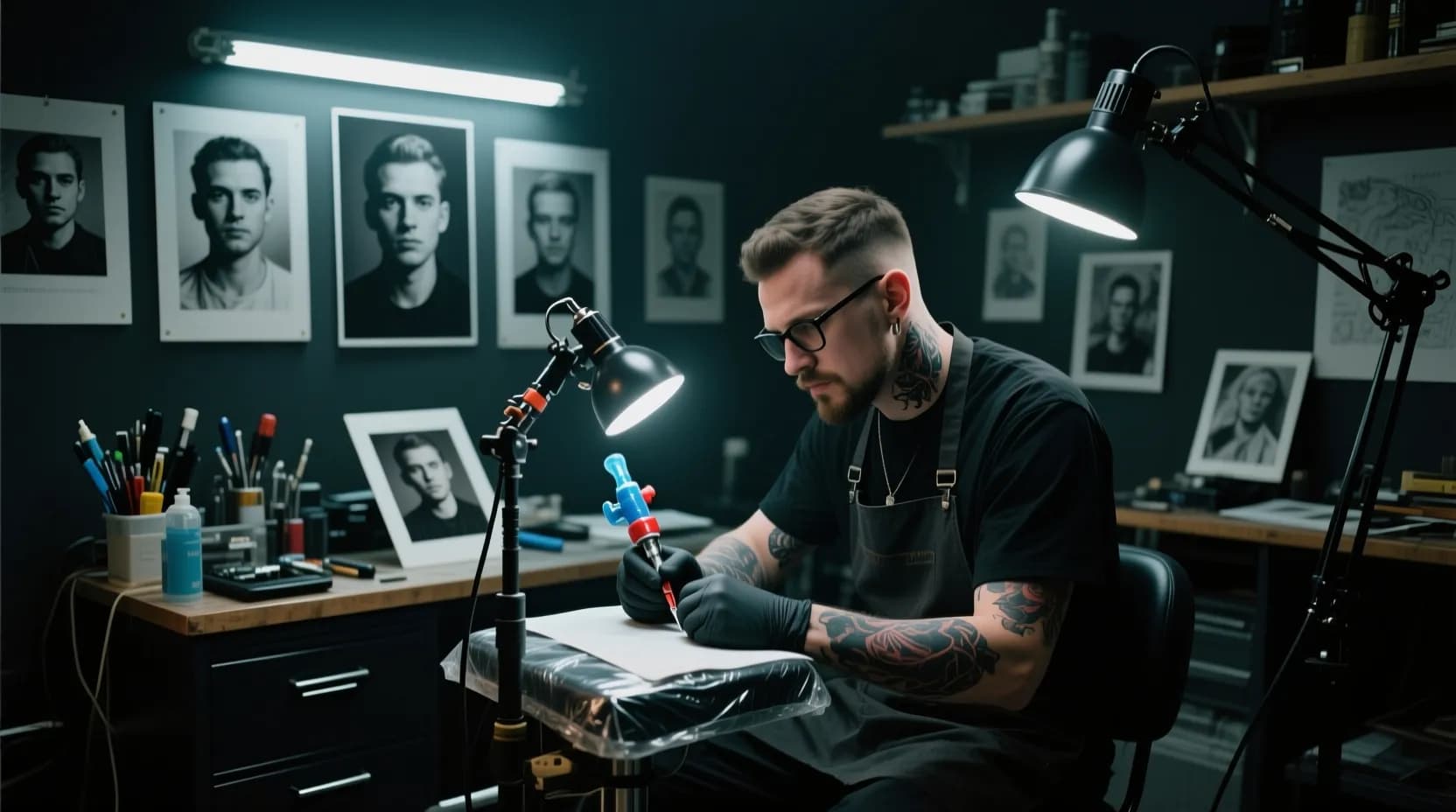
The best portrait tattoo styles are black and grey realism for likeness that ages well, color realism for vivid detail, fine line and minimalist for small pieces, and illustrative or neo-traditional when you want character more than a photographic match. The right choice depends on how exact the face must look, how big the tattoo can be, and which style your artist actually specializes in. This guide compares twelve portrait tattoo styles side by side, then covers reference photos, size, cost, common failures, and how to preview a style before you book.
I built Ink Studio AI around the same problem: people arrive with a photo and no idea which style will survive on skin. Treat everything here as a briefing for your consultation. The final call belongs to a portrait artist who has healed work to show you.
Portrait Tattoo Styles Compared
Portrait work is a specialty. An artist who excels at traditional or geometric work is not automatically a good portrait artist, because realism depends on controlling light, shadow, and subtle tonal transitions (No Pain Tattoo, 2025). The table below summarizes how each style behaves. Size and cost columns are general guidance from my own experience and the sources cited later, not fixed rules, so ask your artist for exact numbers.
| Style | Likeness | Detail level | Aging | Minimum size | Cost tier | AI prompt keyword |
|---|---|---|---|---|---|---|
| Black and grey realism | Highest | Very high | Strong when shaded with contrast | Medium to large | High | "black and grey realism portrait" |
| Color realism | Highest | Very high | Colors can shift over time | Medium to large | Highest | "color realism portrait" |
| Photorealism (hyper-detailed) | Highest | Extreme | Needs size and good placement | Large | Highest | "photorealistic portrait, soft studio light" |
| Micro-realism | High, if the photo is simple | High but tiny | Risky, fine detail can blur | Small, with limits | High | "micro realism portrait, single needle" |
| Fine line | Medium | Medium | Light lines can fade faster | Small to medium | Medium | "fine line portrait, delicate strokes" |
| Minimalist / single line | Low, suggests the person | Low | Good, few lines to blur | Small | Low | "minimalist continuous line portrait" |
| Sketch / linework | Medium | Medium | Good with bold lines | Small to medium | Medium | "sketch portrait, bold outlines, minimal shading" |
| Illustrative | Medium | Stylized | Good | Medium | Medium to high | "illustrative portrait tattoo, bold line and soft shading" |
| Neo-traditional | Low to medium | Stylized | Good, bold lines hold | Medium | Medium to high | "neo-traditional portrait, bold color, thick outline" |
| Traditional | Low | Simplified | Very good | Small to medium | Low to medium | "american traditional portrait, bold black outline" |
| Watercolor | Low to medium | Soft, loose | Soft edges can blur | Medium | Medium | "watercolor portrait tattoo, splashes of color" |
| Dotwork / stipple | Medium to high | High, built from dots | Good if dense | Medium | High | "dotwork stipple portrait" |
Likeness is the main trade-off. The closer a style sits to a photograph, the more it asks of the artist, the skin, and the size of the piece. Stylized options give up some accuracy in return for forgiveness.
Realism and Photorealism Portrait Tattoos
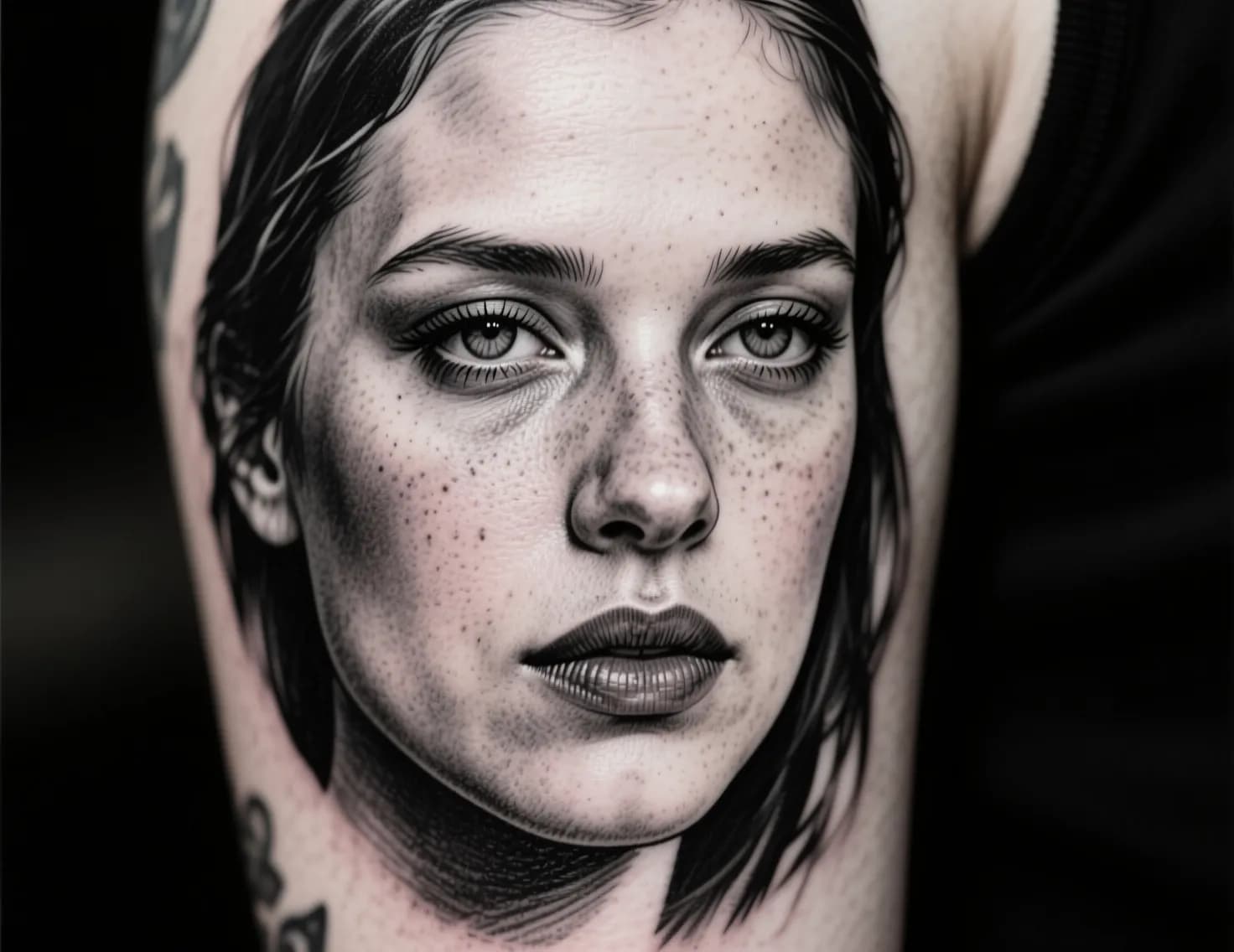 Realistic portrait tattoo example
Realism is the most faithful translation of a photo. It captures soft gradients, skin texture, and the highlight in an eye. It is also the least forgiving: if proportions or textures are slightly off, you get something unsettling instead of moving (Tattooing 101).
Pros: highest likeness potential, strong for memorials, impressive when done well. Cons: the most expensive and time-consuming option, needs real size, and quality varies widely between artists.
Black and grey
Black and grey is the classic portrait style. It relies on smooth shading and contrast, similar to a black and white photograph, and suits family, memorial, and timeless pieces (Lunar Ink Gallery, 2025). The single tonal range gives the artist full control of contrast, and it tends to age more gracefully than color (No Pain Tattoo, 2025). For most people with a person or pet to honor, this is where I would start.
Color realism
Color portraits use the full spectrum to capture skin tone and eye color, which suits pop culture subjects and vivid childhood photos. They need even more technical skill, and colors can shift over time in ways that change how skin tone reads (Lunar Ink Gallery, 2025; No Pain Tattoo, 2025).
Micro-realism
Micro-realism shrinks a realistic portrait to a small footprint. The small size is the appeal and the risk, because facial detail disappears when the piece is too small. Choose a simple photo with a clear face and expect your artist to decline if the reference will not hold up at that scale.
Line-Based Portrait Styles
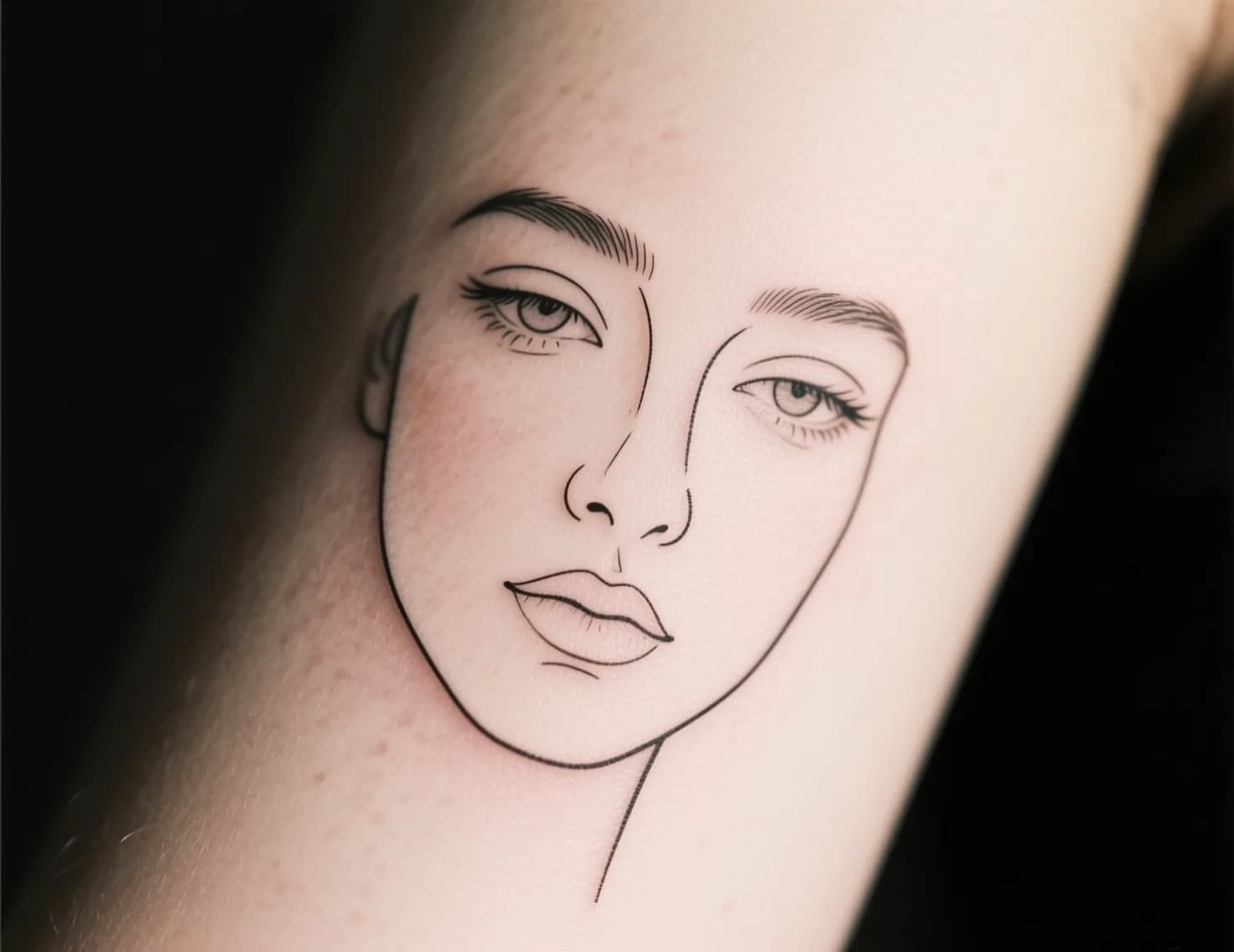 Fine line portrait tattoo
Fine line
Fine line uses delicate strokes instead of heavy shading, giving a soft, almost sketch-like portrait that suits small placements. The trade-off is that light lines can fade faster and may lose detail on a busy photo. It leaves little room for error, because there is no shading to hide a wobbly line (Lunar Ink Gallery, 2025).
Minimalist and single line
A minimalist portrait reduces a face to a few lines or shapes. It works for tiny memorials, hidden placements, and first tattoos, and sessions are short. It is the least accurate option, so it suits people who want to suggest a person rather than reproduce them. Keeping it elegant still takes a skilled artist.
Sketch and linework
Sketch styles use bold outlines with little shading. They are more forgiving with a mediocre photo and quicker to execute, but they read as an interpretation rather than a true likeness, and can look flat if over-simplified.
Stylized Portrait Tattoos
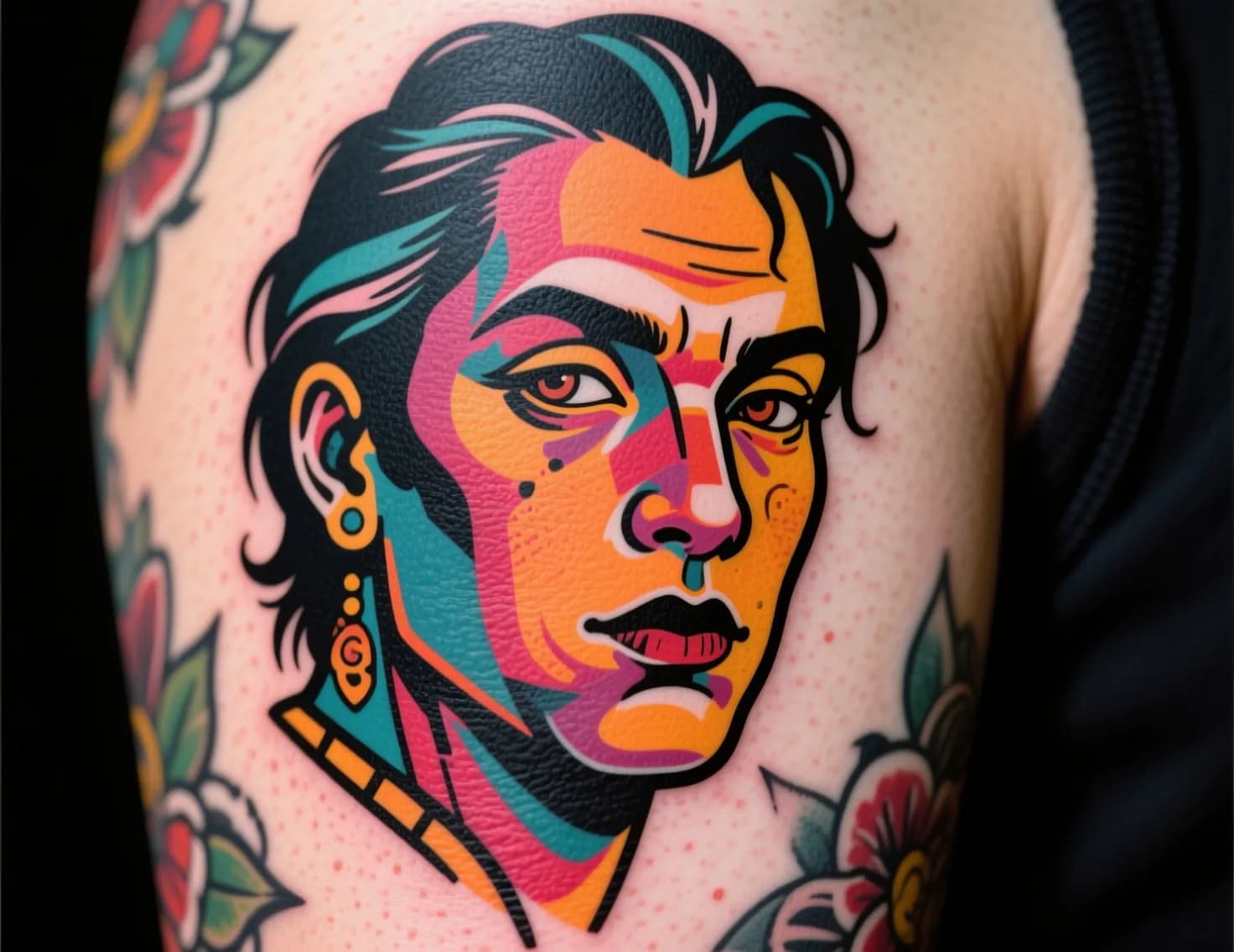 Neo-traditional portrait tattoo
Illustrative
Illustrative portraits blend realism with artistic flair, using bold lines, soft colors, or comic influences. You capture the essence of a person, such as personality and charm, without needing every feature to match (Tattooing 101; Lunar Ink Gallery, 2025). It also gives the artist more creative freedom and works across skin tones.
Neo-traditional and traditional
Neo-traditional adds stylized linework and bold color to a face. Traditional portraits go further toward simplification, with heavy outlines and a limited palette. Both age well because bold lines hold, but neither will make a stranger say "that is exactly him." Pick them for character and boldness.
Watercolor and dotwork
Watercolor portraits use loose splashes of color and soft edges, so they suit an artistic look over a precise one. Dotwork builds the face from stippled dots and can reach good likeness with a distinctive texture. Both depend heavily on one artist's skill with the technique, so judge them only by healed examples.
How to Choose the Right Style
Start from your priorities, then check the style against your photo and your budget.
- Exact likeness matters most: black and grey realism, or color realism if the colors carry meaning.
- Size is limited: fine line, minimalist, or a simple micro-realism piece.
- You want a bold tattoo look that ages well: neo-traditional, traditional, or illustrative.
- It is a memorial: black and grey realism for emotional depth, or a simpler line style if the person would have preferred understated. See our memorial tattoo from photo guide for planning and an artist checklist.
- The photo is weak: sketch or illustrative, which tolerate lower-quality references better. Ask your artist whether a better photo exists first.
For animals, the same styles apply with different priorities. Our pet portrait tattoo guide covers fur texture, eye detail, and pet-specific placement.
Reference Photo Rules
After the artist's skill, the reference photo is the biggest variable. A poor photo caps the result no matter how good the artist is (No Pain Tattoo, 2025). Check these before the consultation:
- High resolution, not a screenshot or compressed social media image.
- Sharp focus on the face with even light, without heavy shadow across one side or blown-out highlights.
- A natural expression. Neutral or slight smiles translate better than wide grins, since teeth are hard to render in realism.
- No extreme angles, heavy filters, or group shots where the face is small.
- If the only photo is an old print, say so up front. Some artists work from vintage images, but the limits should be discussed.
Bring several options and let the artist choose. For a step-by-step walkthrough, follow how to prepare your photo for a tattoo conversion.
Size and Placement for a Recognizable Face
Faces carry subtle details, such as the shape of an eye or a particular smile line, and those details disappear at small sizes. Most portrait specialists set a minimum size for that reason, and an underdone portrait that loses the likeness is worse than none (No Pain Tattoo, 2025). I could not find a reliable published inch figure, so ask each artist for theirs and treat it as a real limit.
Common placements are the upper arm, forearm, chest, upper back, thigh, and calf. The upper arm is the most common because the skin is stable, flat, and easy to work on. Avoid elbows, knees, hands, and fingers, which break down ink faster. A calf can distort a face between relaxed and flexed positions, so discuss how the piece will look in daily life. Our tattoo size calculator can help you compare scale before the consultation, and the tattoo placement guide covers pain and aging by body area.
Portrait Tattoo Cost and Session Length
Portraits cost more than most styles because of the time and specialization involved. Published shop figures from 2025 give a rough range, but prices vary widely by city and artist.
| Source | Piece | Price or time |
|---|---|---|
| Lunar Ink Gallery, Houston, 2025 | Small portrait | $300 to $600+ |
| Lunar Ink Gallery, Houston, 2025 | Medium to large portrait | $700 to $1,500+ |
| No Pain Tattoo, 2025 | Palm-sized, skilled realism artist | Often starts at $500 to $800 |
| No Pain Tattoo, 2025 | Day rate, top portrait specialists | Commonly $1,000 to $2,000+ |
Expect color work at the higher end, since it takes more time and ink. For session length, Lunar Ink Gallery describes sessions of 3 to 6 hours, and No Pain Tattoo says a detailed portrait runs from about four hours to a full day or multiple sessions. For general pricing logic, see how much a tattoo costs or try the tattoo price calculator.
How to Choose a Portrait Artist
- Look for healed work. A fresh portrait looks sharp. Healed photos show whether shading and contrast survived (No Pain Tattoo, 2025).
- Check range. An artist who has tattooed children, older faces, and animals handles your reference better than one with a single face type.
- Read reviews and tagged client posts, and ask for portfolio pieces similar to yours in subject and style.
- Book a consultation. A good artist tells you honestly what is achievable and may ask for a different photo or size. Be wary of anyone who agrees to everything.
- Ask for a preview sketch or digital mockup before the session (Tim Lease Tattoos, 2025).
- Be ready to travel. Portrait specialists are not evenly distributed, and a longer drive is cheaper than a cover-up.
Common Portrait Tattoo Failures and How to Avoid Them
| Problem | Usual cause | How to avoid it |
|---|---|---|
| Face does not look like the person | Wrong artist, weak reference, or too small | Vet healed work, use a strong photo, accept the minimum size |
| Detail turns muddy | Piece too small or rushed shading | Choose a larger size or a simpler style |
| Soft tones fade | Poor aftercare, early sun, friction areas | Follow aftercare, use sunscreen, avoid elbows and knees |
| Uncanny or "off" expression | Awkward angle or extreme expression in the photo | Use a neutral, front-facing reference |
A portrait that misses the likeness is hard to fix. Options are a cover-up, a rework by a specialist, or accepting it as a stylized version, and cover-ups are difficult because of the tonal complexity (No Pain Tattoo, 2025). Prevention is far cheaper. Follow the full tattoo aftercare guide during healing, since the delicate shading is what poor healing erases first.
People, Pets, and Celebrities
A living person is no different technically from a memorial subject: reference quality, artist skill, placement, and aftercare apply equally (No Pain Tattoo, 2025). Pets add fur and eye detail, covered in the pet guide above. Celebrity portraits are common and generally personal artwork, but if you start from AI-generated art or plan to publish or sell images of the design, read AI tattoo copyright and ownership. I am not a lawyer, so check local rules for commercial use of someone's likeness.
Preview Portrait Styles With Ink Studio AI
You can test how a photo reads in different styles before paying a specialist. Upload a clear reference to the image to tattoo converter and compare a realism, fine line, or sketch version using the keywords in the table above. You can also explore alternate looks with the AI Tattoo Generator. New accounts can create a first design without a credit card.
Treat the output as a concept for discussion, not a tattoo-ready stencil. It does not replace a portrait artist, who will rebuild the shading and proportions for skin. For prompt wording, see tattoo styles explained for AI generation and the photo to tattoo design guide.
Frequently Asked Questions
How much does a portrait tattoo cost?
Published 2025 figures range from about $300 to $600+ for a small portrait and $700 to $1,500+ for medium to large pieces at one Houston shop, with top specialists charging $1,000 to $2,000+ per day (Lunar Ink Gallery; No Pain Tattoo). Your city, the artist, and color all change the quote.
How big does a portrait tattoo need to be?
Big enough to hold the details that make the face recognizable, and that depends on the style and artist. Most portrait specialists set a minimum size, so ask for yours during the consultation. Realism needs more space than minimalist or line styles.
Do portrait tattoos age well?
They can. Black and grey realism in a stable placement, kept moisturized and out of the sun, can hold its likeness for decades, though touch-ups every ten to fifteen years are normal for realism (No Pain Tattoo, 2025). Portraits are more vulnerable than bold designs because detail sits in subtle tones.
What is the best style for a portrait tattoo?
For likeness, black and grey realism is the most common and forgiving choice. For boldness and longevity, illustrative or neo-traditional styles work well. The best style is the one your artist has healed examples of.
Can a portrait tattoo be small?
Yes, in minimalist, fine line, or simple micro-realism styles, but a smaller piece means less accuracy. Pick a clear photo and a style that suggests the person rather than copying every feature. See tattoo touch-ups for what to expect as fine work settles.
How long does a portrait tattoo take?
Sources describe about 3 to 6 hours for many pieces and up to a full day or several sessions for large, detailed ones. Plan around your artist's schedule.
Can I get a portrait tattoo of a living person?
Yes. Partners, parents, children, and friends are common subjects, and the technical considerations are the same as for a memorial piece.