 Francesco Chiaramonte
The best way to try a tattoo before getting it is to combine two tests: a digital mockup on your own photo to compare placement and size, then a physical test, such as a temporary tattoo or the artist's stencil, to see how the design feels on your body in motion. No single method answers every question. A tattoo simulator shows composition quickly, while temporary ink and stencils show scale and movement in real life.
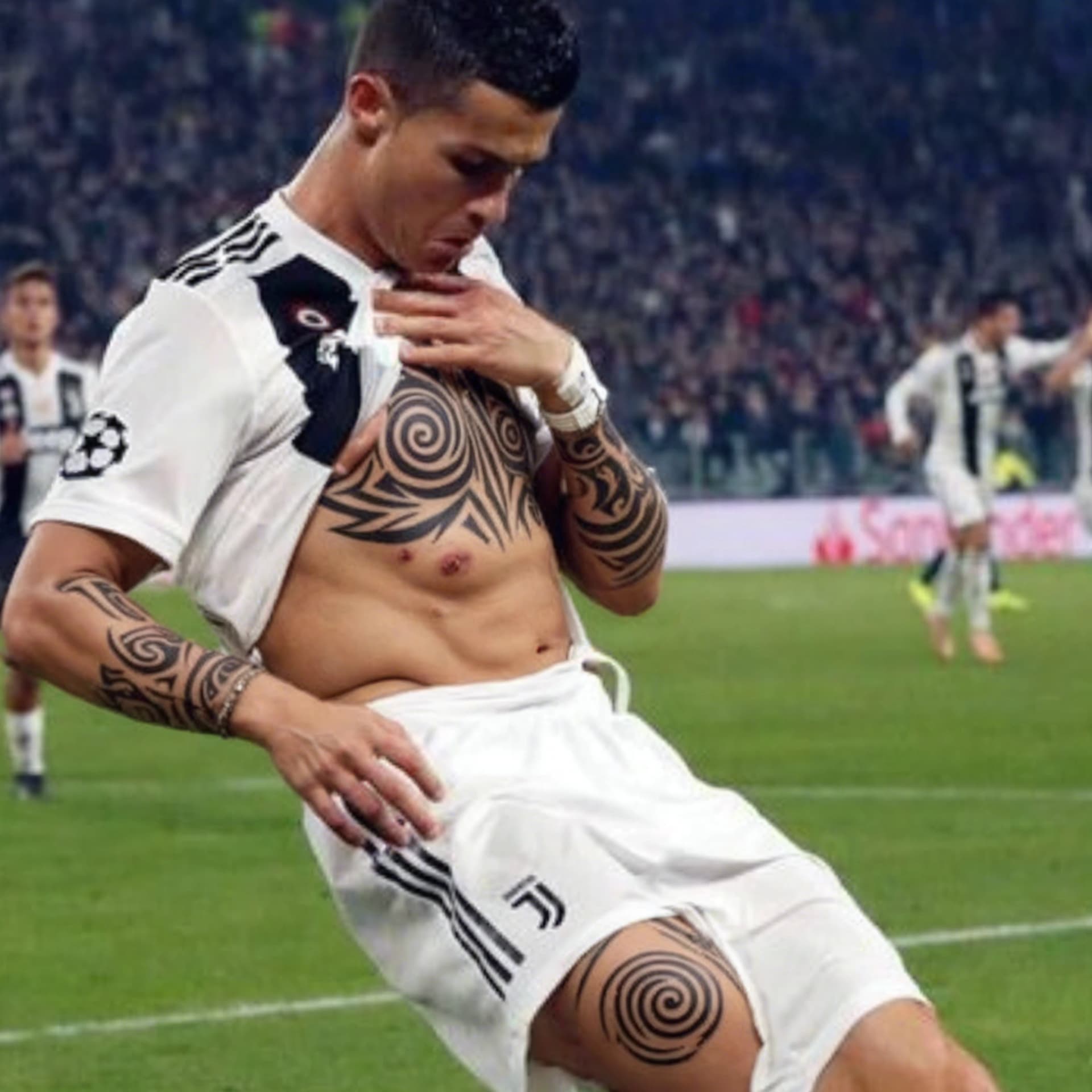 ronaldo with tattoos
This guide covers seven ways to test a tattoo, what each one can and cannot tell you, a step-by-step process for making a photo mockup useful, and a checklist for the final decision.
The 7 Ways to Test a Tattoo Before You Commit
| Method | Cost | Realism | How long it lasts | What it tests |
|---|---|---|---|---|
| Photo mockup in a simulator | Free to low | Medium (flat, 2D) | Permanent file | Placement, size, angle, composition |
| AR or 3D app | Free to subscription | Medium to high | Live view only | Placement while you move |
| Temporary tattoo paper | Low | Medium | Days | Size and how it feels to wear |
| Semi-permanent ink (Inkbox) | About $10 to $20 per design (2019) | High | One to two weeks | Placement, size, daily visibility |
| Henna | Varies by artist | Low (reddish brown, plant-based) | A few days | Rough size and position |
| Artist stencil or skin-safe pen sketch | Usually free at the appointment | High for shape | Hours | Exact placement, flow with muscles |
| Wearing a design for a week | Low | High | 1 to 2 weeks | Whether you still like it after daily life |
Prices and durations come from the sources linked in each section below. Treat them as ranges, because brands change their products.
1. A photo mockup
A mockup puts your design on a photo of the body area. It is fast, free to repeat, and good for comparing three placements in ten minutes. It is flat, so it shows composition well and curvature only roughly.
Ink Studio AI's try-on tool works this way. It is a 2D photo composite, not AR or 3D scanning. You choose a sample photo or upload your own, and an on-device model finds the skin so the design shows only on skin. You then drag, resize, and rotate the design, set how much it curves around the arm or leg, and use the brush to erase or restore parts. The tool says your photo and design are processed in your browser, and a free account is needed only to download the result.
2. An AR or 3D app
Some apps overlay a design on your body through the phone camera, so you can turn your arm and watch the design follow. This is more convincing than a still photo for judging how a piece sits when you move. Quality varies a lot, and many apps are in beta or limit free use. For a comparison of specific apps, see our roundup of virtual tattoo try-on tools.
3. Temporary tattoo paper
You can print a design on temporary tattoo paper and transfer it to your skin. The general method is to cut out the design, press it face down on clean dry skin, wet the backing, and peel the paper away. Printer compatibility differs by brand (some paper is made for inkjet, some for laser), so check the packaging before you print. Printed transfers are a short-term test lasting days, and they tend to crack on joints that bend a lot.
This method tests real size better than any screen. Stick it on, then look in the mirror at arm's length and across a room, which is how other people will see it.
4. Semi-permanent ink such as Inkbox
Inkbox is the best-known option for a longer test. According to a Reviewed hands-on test from 2019, the company says its tattoos take about 15 minutes to apply, develop over 24 to 36 hours, and last one to two weeks. The reviewer's moon design turned deep blue after 24 hours and faded fully in two weeks. Individual designs cost $10 to $20 then, and the designs are limited to a single color.
The same review found that another design barely developed, and that the ink looked blue on fair skin. Skin tone and body chemistry change the result, so use this method for placement and size, not for color or exact line quality. Check Inkbox's own site for current prices and instructions, since the review is from 2019.
For comparison, the same review lists Tattly, a transfer-style temporary tattoo, at around two to four days of wear for most designs.
5. Henna
Henna is plant-based and stains reddish brown, so it only tests rough position and size. The bigger issue is safety. So-called black henna often contains para-phenylenediamine (PPD), a hair dye chemical. NBC News reported in 2008 that true henna is red and fades within a few days, and that black henna can cause blistering and permanent scarring, with reactions that can appear days to a week later.
If you want a henna test, avoid anything labeled black henna and ask the artist what is in the paste. A skin-safe alternative is usually the better choice for a tattoo test.
6. The artist's stencil or a sketch on your skin
This is the closest test to the real thing. In a typical appointment, you review the finished artwork first, the stencil goes on, and you check it in a mirror before any ink goes in. Club Tattoo describes the sequence: consultation, design approval, stencil, and a placement check where you can say if something feels too high, too low, or too angled. It also notes that adjusting the stencil is part of the process.
Stand, sit, and move while the stencil is on. A stencil that looks right in the mirror can look off when you reach for something or cross your arms.
7. Wearing the idea for a week
The cheapest test is time. Save the mockup as your phone wallpaper, or wear a temporary version for a week. If you still like it after seven days of ordinary life, that tells you more than a first-hour impression.
How to Build a Digital Mockup That Actually Helps
Most bad mockups come from bad inputs. These steps make the result more useful for an artist conversation.
- Take a straight-on photo in even light. Use natural daylight, no filters, and no deep shadows. Keep loose sleeves out of the frame and show the whole body area.
- Use a design with clear edges. A transparent PNG works best. The simulator can try to remove a simple background, but a clean file gives a cleaner result.
- Set the real size first. Measure the area with a ruler or a soft tape, then check your numbers in the tattoo size calculator. A design that fills a forearm on screen may be 15 cm tall in real life, which is a different tattoo from a palm-sized one.
- Try two or three placements. Use separate photos for each body area or angle. Our tattoo placement guide covers pain, visibility, and aging by area.
- Compare sizes in the same frame. Keep the camera distance constant so the previews are comparable. Save each version with a label such as "forearm, 12 cm".
- Check movement and clothing. Take a second photo with your arm bent or in the clothes you wear most. See whether a collar, sleeve, or watch hides the design.
- Save and bring the files. Show them to your artist as a starting point for placement and size, not as a final stencil.
If you do not have a design yet, the AI tattoo generator can produce concepts to test. Treat them as ideas to discuss, since a professional artist still needs to adapt any design to your skin and chosen size.
What a Mockup Cannot Tell You
A preview is a planning tool. Several things only show up on real skin over time.
- Skin tone and undertone. Ink sits under the skin, so the same black or color reads differently on different skin. A mockup shows a flat overlay.
- Healing. Fresh and healed tattoos look different, and the final result depends on technique and aftercare. Our aftercare guide explains the process.
- Line spread and fine detail. Very small, dense designs can lose definition as skin ages. Ask your artist whether your detail level suits the size.
- Curvature and muscle movement. A flat or lightly curved preview does not capture how a design stretches when you flex.
- Skill of the artist. The same artwork looks different depending on who tattoos it.
Encre Vive makes a similar distinction in its guide to try-on apps: a preview shows the overall composition, while only real skin shows the tattoo itself.
Questions to Bring to the Consultation
Take your mockups and ask these before you book:
- How do you confirm placement before tattooing? (Look for a stencil placed while you stand and move.)
- Will I see the stencil first, and can we adjust it?
- Does this design work at this size, or should I make it larger or simplify it?
- How will the design change as it heals and ages?
- Can you show healed photos of similar work?
- If the design extends later into a larger piece, how should we plan the layout? See our sleeve planning guide.
The "Sleep On It" Decision Checklist
Go through this list a day or a week after your last test.
- I tested at least two placements and two sizes.
- I saw the design at real size, on skin, at least once (paper, semi-permanent ink, or stencil).
- I looked at it from arm's length and across a room.
- I checked it in the clothes I wear most, and at work if that matters.
- I still like it after seven days.
- I can describe why I want this design, not just how it looks.
- My artist agreed with the size and placement.
- I know what the healed result will look like in my skin tone.
If you answer no to several of these, wait. A tattoo appointment can be rebooked, and the design cannot be undone cheaply.
Frequently Asked Questions
Is there an app to see how a tattoo would look on you?
Yes. Photo simulators and AR apps both overlay a design on your body. A browser-based option such as the Ink Studio AI try-on tool needs no install. Apps vary in quality, and none predict the healed result exactly.
How can I test a tattoo before getting it?
Start with a photo mockup to narrow down placement and size, then do a physical test with temporary tattoo paper or semi-permanent ink. Finish with the artist's stencil at the appointment. Wearing a temporary version for several days also helps.
How long do Inkbox tattoos last?
The company says one to two weeks, and a 2019 Reviewed test saw one design fade to nothing in two weeks. Results differ by design, placement, and skin. Check Inkbox's current instructions for the latest claims.
Can I print my own temporary tattoo?
Yes, with temporary tattoo paper made for your printer type. Cut out the design, place it on clean dry skin, wet the backing, and peel. It lasts days, and fine lines can crack on joints. Test a small patch first if you have sensitive skin.
Will the artist show me the stencil first?
Normally yes. The stencil is applied and you check it standing and moving before tattooing starts. You can ask for it to be moved, rotated, or resized. If an artist skips this step, ask for it.
Is a tattoo simulator accurate?
It is accurate for comparing placement, approximate scale, and angle. It cannot predict how ink will look in your skin, how it will heal, or how it will age. Use it for planning and let your artist make the final call.
Is henna a safe way to test a tattoo?
Natural henna is a plant stain that fades in days, but black henna can contain PPD, which has caused blistering and scarring. Avoid black henna and ask what is in any paste before it touches your skin.
Final Thoughts
Start with a photo mockup to save time, then move to something physical before you commit. The stencil at your appointment is the final check, and a week of waiting is the cheapest one. When you are ready to compare placements, open the virtual tattoo try-on tool, save two or three versions, and bring them to your artist.
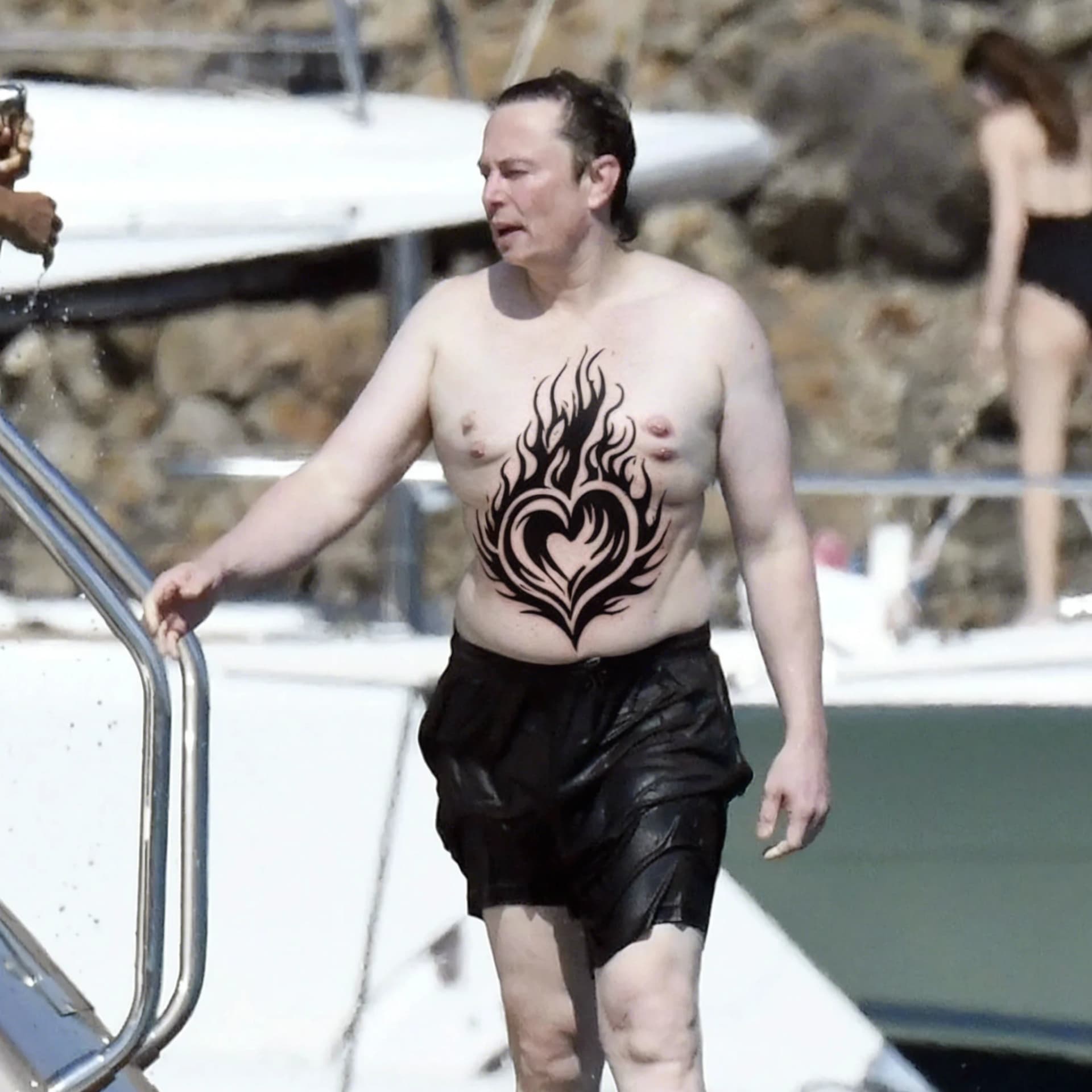 elon musk with tattoos